The Cervix—Functions Throughout the Menstrual Cycle
- Anatomy: The cervix forms the passageway from the vagina to the uterus.
- Changes during the menstrual cycle:
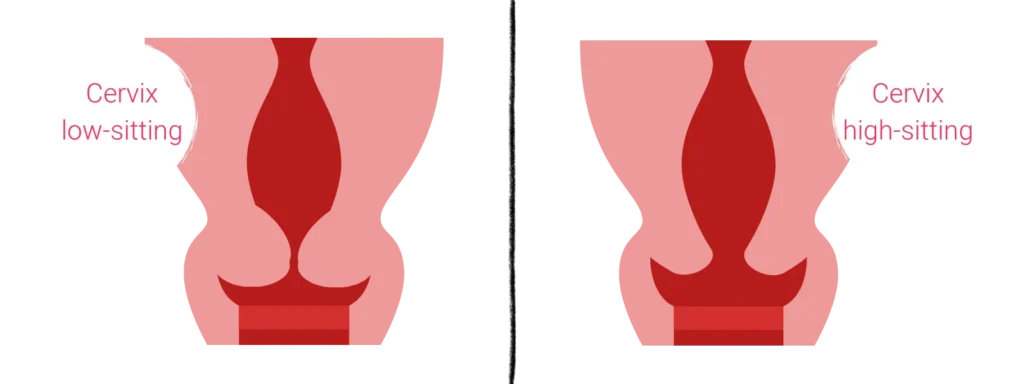
- Infertile phase: The cervix is low, firm, and closed.
- Fertile phase: The cervix moves upward, becomes soft, and opens.
- Cycle Tracking (NFP): Checking for changes in the cervix daily is a reliable bodily sign for determining fertile days (symptothermal method).
- Pregnancy & Childbirth: During pregnancy, a mucus plug seals the cervix; during childbirth, it opens completely.
You’re probably familiar with the cervix if you’ve ever looked into the uterus in detail. It forms the passageway from the vagina to the body of the uterus. But did you know what an important role it plays? In this blog post, we’ll take a closer look at the cervix: how flexible it is, how it helps during childbirth, and what it has to do with the symptothermal method.
Cervix or cervical os
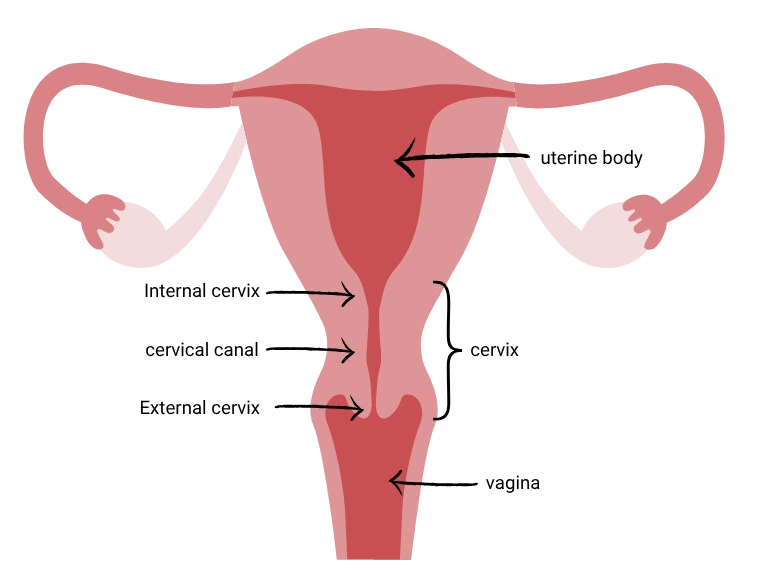
First, we need to clarify the terminology—because sometimes the cervical os is confused with the cervix. Strictly speaking, however, the cervical os is part of the cervix, as you can see in the illustration. The cervix connects the vagina to the body of the uterus. The opening into the vagina is the external os, and the opening on the other side—that is, leading to the body of the uterus—is the internal os. The cervical canal is located between them. The cervix therefore comprises the os and the cervical canal.
The Cervix Throughout the Menstrual Cycle
The external os changes in texture depending on the phase of your cycle and is an important indicator of whether you are currently fertile or not. This is because it acts as a sort of “gatekeeper” that determines what enters or leaves the uterus.
Cervix During Your Period
Your period marks the beginning of your cycle. During this time, the uterine lining that developed during the previous cycle is shed and exits the vagina as bleeding. To allow the blood and lining to exit, the external opening of the cervix opens slightly.
Cervix During the Follicular Phase
After your period, the second phase of your cycle begins: the follicular phase. During this phase, your body prepares for ovulation. The cervix is positioned deep inside and is tightly closed, because during this phase of the cycle, neither the endometrial lining is shed nor are sperm supposed to enter yet. In addition, little to no cervical mucus enters the vagina.
The Cervix During Ovulation
During ovulation, your body does everything it can to ensure that sperm can reach the egg that is released during ovulation. To do this, they must pass through the cervix to travel through the uterus to the fallopian tube. The cervix is positioned higher so that sperm can travel more quickly through the cervix into the uterus. It is also open and soft. Since cervical mucus production is in full swing, the cervix is moist. The cervical mucus helps the sperm reach the uterus while protecting them from the acidic vaginal environment.
Cervix During the Luteal Phase
During the final phase of your cycle, the external os closes again and, much like during the follicular phase, protrudes deep into the vagina. After ovulation, the os is also firm and dry.
The Cervix During Pregnancy
During pregnancy, the external os is closed again. This protects the unborn baby. As the baby grows, the uterus expands, and eventually the cervix does as well. During pregnancy, a thick mucus plug forms in the cervix, sealing the cervical opening. This mucus plug prevents bacteria from entering the uterus. During labor, the external os then opens so that the baby can make its way out.
The Cervix in the Symptothermal Method
With the symptothermal method, you can determine your current fertility by observing two bodily signs. You can combine your basal body temperature with observations of cervical mucus or with observations of the position of the cervix throughout your cycle. The position of the cervix also provides information about which phase of your cycle you are currently in.
Checking Your Cervix—Here’s How:
You can use your finger to determine the position of your cervix. To do this, you should check your cervix daily after emptying your bladder. While in a comfortable position, insert one or two clean fingers into your vagina and move them backward and upward. Then try to feel the cervix using circular motions. To ensure you can accurately detect changes over time, always use the same fingers. As you feel for it, pay attention to whether the cervix feels hard and firm (similar to nasal cartilage) or soft (similar to an earlobe) and moist.
With the symptothermal method, you can determine when your fertile days are in your cycle. This way, you can use it either as a method of birth control or to help you conceive.
How trackle Can Help You with the Symptothermal Method
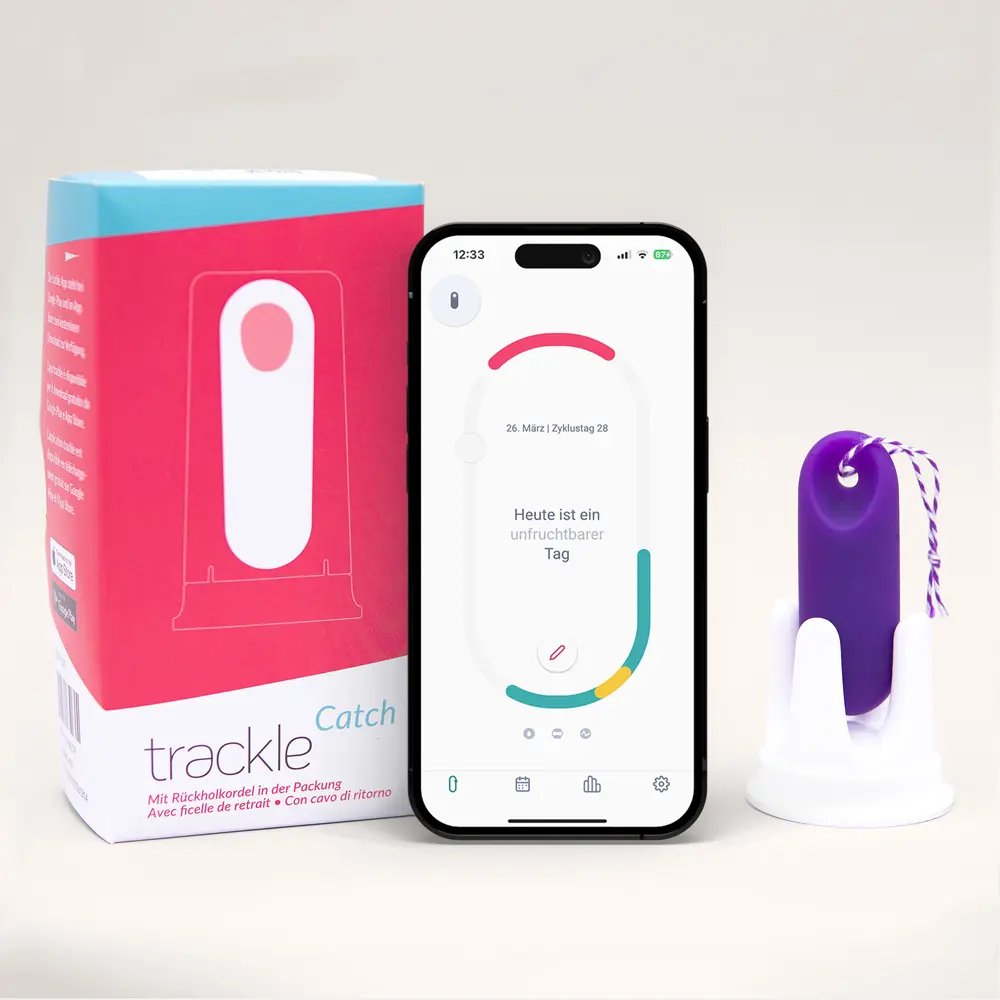
trackle is a vaginal sensor that you insert in the evening. This allows you to conveniently measure your basal body temperature while you sleep. In the morning, you simply sync the data to the trackle app.
To analyze your data with trackle, it’s also important to record your cervical mucus daily. You can read more about exactly how this works here. You can also record your cervical mucus in the trackle app, but you don’t have to: temperature and cervical mucus data are completely sufficient to reliably determine your fertility status. trackle is easy to use and completely safe.