
Contraception for Men
Safe Methods for Men: There are only two reliable options—the condom (Pearl Index 2) and permanent vasectomy (Pearl Index 0.05).
Unreliable Options & The “Male Pill”: Coitus interruptus is not recommended due to its high Pearl Index of 22; the hormonal “male pill” has not yet been approved due to severe side effects.
Joint fertility window: An egg is fertile for a maximum of 18 hours, while sperm can survive for up to 5 days. Therefore, there are only a maximum of 7 days of joint fertility per cycle.
Symptothermal method (NFP) as a hormone-free alternative: The combination of basal body temperature measurement and cervical mucus observation achieves a Pearl Index of 0.4 and is recommended by the DGGG.
Easy to use with trackle: The certified cycle tracker measures your temperature overnight and automatically and reliably evaluates your fertility status via the app according to the rules of the symptothermal method.

In our society, the responsibility for contraception often falls on women. Yet preventing an unwanted pregnancy—which, as we know, always involves two people—is no longer just a woman’s issue. Male contraception is becoming increasingly important.
A woman’s fertile window lasts a maximum of 18 hours during her cycle. Men, on the other hand, produce sperm continuously and are fertile every day. This allows for a fresh perspective on the topic of “male contraception.” Incidentally, when combining these two criteria, we arrive at a combined fertility period of up to seven days in the female cycle.
So it’s high time to take advantage of these scientifically proven facts and question whether women really need to burden their bodies daily with artificial hormones or copper. If your answer to this question is already “no”, then you’ve come to the right place:
In this article, you’ll learn about the contraceptive methods available for men. We’ll show you which methods are truly safe and which ones you’re better off avoiding. We’ll also discuss side effects and introduce you to an option for shared contraception.

Male Contraception—Here Are Some Safe Options:
While there are a variety of well-known contraceptive methods available to women, there are only two reliable methods of male contraception:
- The condom (barrier method)
- Vasectomy (surgical procedure)
The Condom
Condoms are the most popular form of birth control among Germans, as shown by a 2023 study by the Federal Center for Health Education (BZgA). For the first time, condoms even surpassed the birth control pill, which had been the top choice until then.
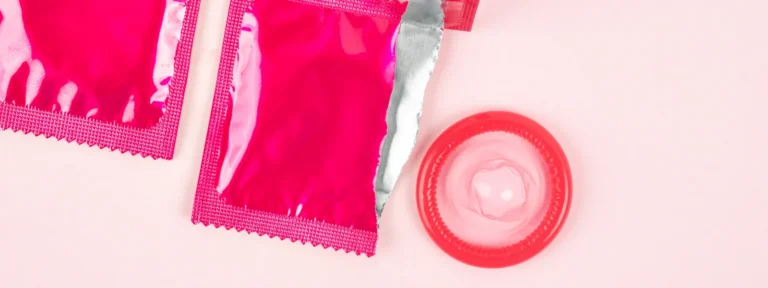
The condom is the best-known and most widely used method of contraception for men and is usually made of latex. However, there are also condoms made of plastic, which offer a suitable alternative for people with latex allergies. You roll it onto the erect penis before sexual intercourse. This prevents semen from entering the vagina. A major advantage of condoms compared to other contraceptives is protection against sexually transmitted diseases.
How safe is the condom?
When used correctly, condoms are quite safe, as they have a Pearl Index of two. The Pearl Index is a measure of how effective a contraceptive method is. It indicates how many out of 100 users became pregnant over the course of a year despite using that method. A lower Pearl Index therefore means greater effectiveness.
To ensure maximum effectiveness, however, it’s important to wear a condom throughout the entire sexual act and to choose the right size. Proper storage of condoms is also crucial: Protect them from heat and direct sunlight. Therefore, do not store them in your pants pocket or wallet, as friction and body heat can occur there. It is also important to check the expiration date and ensure the packaging is undamaged to guarantee the condom’s effectiveness.
Vasectomy
A vasectomy is a long-term method of birth control that is particularly suitable for men who do not wish to have children or who have completed their family planning. There are various methods for performing the surgical procedure: Often, a doctor makes a small incision in the scrotum, cuts the vas deferens, and ties off the ends. Although the testicles continue to produce sperm, these no longer enter the ejaculate. Contrary to many misconceptions, the procedure does not affect either libido or sexual function. A vasectomy takes effect only after a few weeks, so other forms of birth control must still be used during this time.
Compared to female sterilization, a vasectomy is significantly less complicated and carries fewer risks. Although it is generally considered an irreversible procedure, it can be reversed in approximately 60–95% of cases. While the Pearl Index of 0.05 ensures a very high level of effectiveness, reversal is not guaranteed. For this reason, doctors often advise young men against this method.

You'd better stay away from these:
Coitus interruptus
Coitus interruptus, also known as “withdrawal,” is an unreliable method of birth control in which the man withdraws his penis from the vagina before ejaculation. Although the withdrawal method is easy to use and requires no preparation or aids, it still demands a high degree of self-control. In general, this method does not provide adequate protection, as seminal fluid—for example, in the form of pre-ejaculate—can be released even before climax. Ejaculation immediately at the entrance to the vagina can also lead to pregnancy. The user effectiveness of coitus interruptus is 22—meaning that, with typical use, more than one in five women using this method will become pregnant.
The Pill for Men
To date, the so-called “male pill” is not yet available. Despite numerous studies that have examined various options for hormonal contraception for men, none of the contraceptives tested have met the necessary criteria for approval.
The male contraceptive pill is intended to stop sperm production by suppressing hormones. However, studies conducted to date with hormonal preparations highlight the difficulties involved: side effects such as acne, weight gain, mood swings, depressive moods, and changes in libido occurred in the study participants, raising concerns about the acceptability of such a method. As a result, researchers even discontinued some studies. Since the side effects of the birth control pill are comparable in women, the studies have sparked a debate over whether different standards regarding acceptability should apply to men and women—it is argued that under the current approval criteria, the birth control pill for women would likely not receive approval.
The male contraceptive pill thus does not represent an appropriate solution; rather, it merely shifts the problems and side effects of hormonal contraceptive methods from women to men. Yet there is the option of completely hormone-free contraception with no side effects for either partner.

Shared Birth Control with NFP—Safe, Simple, and Without Side Effects
If you’re disappointed by the lack of contraceptive options for men and continue to rule out contraceptives with side effects for your partner, we have a real alternative for you: Natural Family Planning (NFP) using the symptothermal method.
Unlike the pill or other hormonal contraceptives, the symptothermal method offers a shared, hormone-free option for birth control. It does not interfere with your healthy bodily processes or those of your partner and has no side effects whatsoever.
Instead of placing the burden and potential risks solely on one partner, the method enables a collaborative and natural approach that deepens understanding of the female cycle and fosters shared responsibility for contraception.

What is the symptothermal method, and how reliable is it?
Researchers first described the symptothermal method (STM) in 1965 and have studied it extensively ever since. This method allows you to accurately determine your partner’s fertile window. On those days, you either abstain from sex or use condoms as an additional form of protection. On all other days, sex is safe without additional contraception. With a Pearl Index of 0.4, the symptothermal method is actually just as effective as the birth control pill, which has a Pearl Index ranging from 0.3 to 1.
How does the symptothermal method work?
To determine when your partner’s fertile days are in her cycle, you need to identify when ovulation occurs. Keep in mind that sperm can survive in the female body for up to five days. The egg itself remains fertile for a maximum of 18 hours after ovulation. When factoring in a safety margin, this results in a “shared fertility window” of up to seven days per cycle. On all other days, conception is impossible.
Warning: Risk of confusion—reliably determining fertile days is not possible using ovulation calculators, cycle calendars, or cycle apps alone. This is because ovulation does not always occur on the same day and must be determined anew in each cycle. While this may sound complicated, the symptothermal method makes it easy to implement by observing two different bodily signs.
In early 2024, the German Society for Gynecology and Obstetrics (DGGG) recommended the method in its guidelines as the only and safest form of natural family planning.

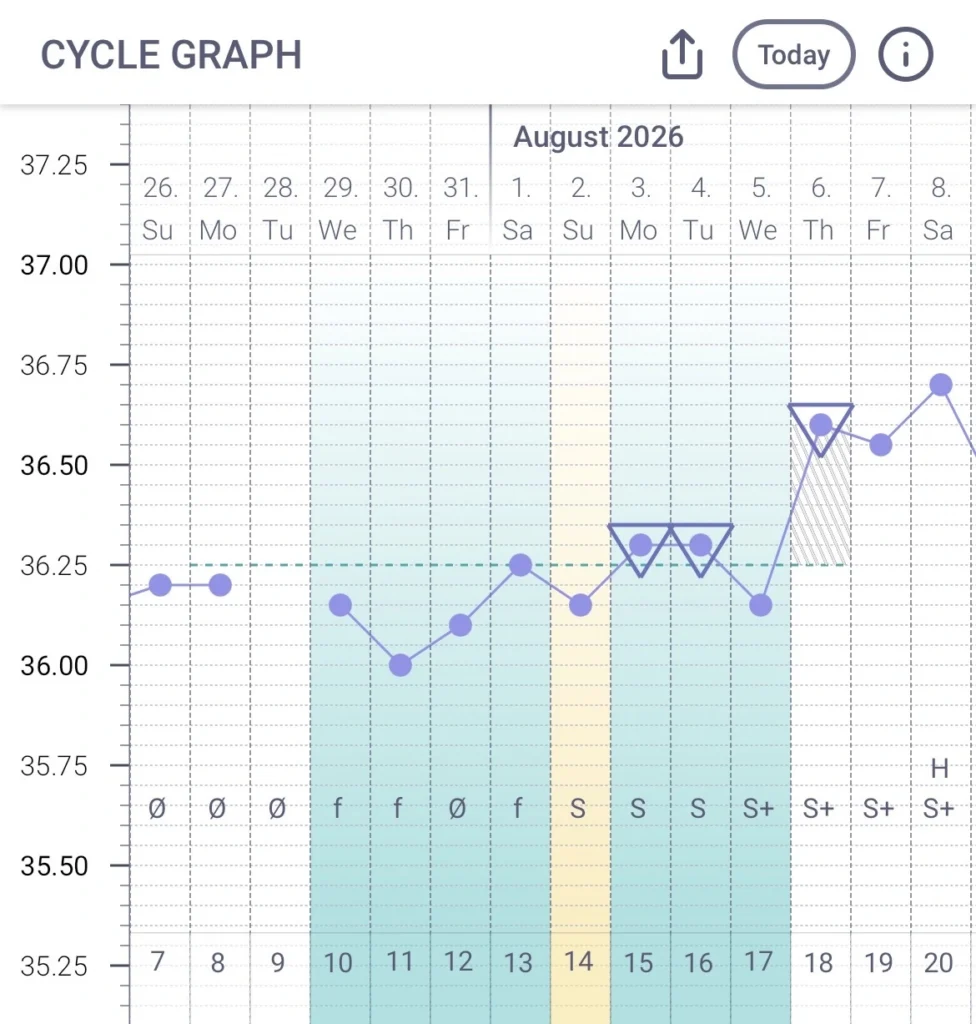
So, to determine ovulation, two independent bodily indicators that have been shown to change cyclically are monitored daily: core body temperature and cervical mucus (a type of healthy discharge that every woman has). While the core body temperature—also known as basal body temperature—rises by at least 0.2 degrees Celsius after ovulation, the consistency of cervical mucus changes around the time of ovulation—it improves in quality, meaning that the cervical mucus becomes clear, glassy, and stretchy. Both of these bodily signs can be reliably observed and thus used to assess fertility status.
These changes in bodily signs are caused by female hormones, which also trigger ovulation. This means they reliably indicate that ovulation is approaching and when it has definitely passed. In the cycle chart below, you can see an example of how the temperature measurably rises after ovulation (shown here in yellow):
Everyday Use
So now you’ve learned which female bodily signs you and your partner can use to determine when she is fertile and when she is not during her cycle. To use the symptothermal method correctly, you’ll need to observe these two physical signs daily: Traditionally, a woman measures her basal body temperature every morning for three minutes after waking up and records her temperature and cervical mucus observations on a cycle chart. She then evaluates her fertility status, and you can check every day whether she’s fertile or not.
The only drawback, however, is that fertility status must be evaluated manually, which requires learning and following specific rules. But we at trackle have the solution!
What trackle Offers You
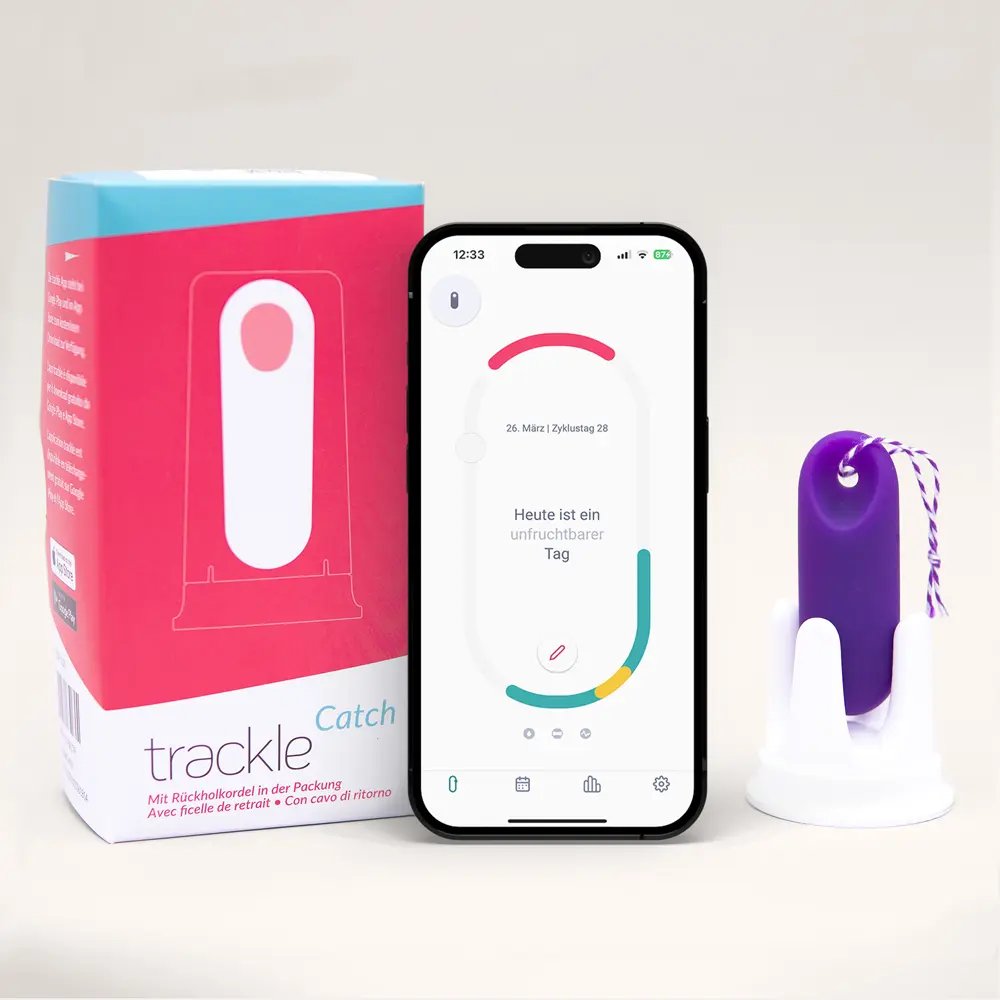
trackle is a certified cycle tracker based on the principles of the symptothermal method, making it easy for you to use this method in your daily life through a digital app. The trackle sensor system is officially approved as a contraceptive, just like the pill or condoms.
It’s very easy to use: Your partner wears the sensor overnight and places it in its case in the morning after waking up. There, it transmits her temperature data to the accompanying app. All that’s left is for her to monitor her cervical mucus, and then you can view her fertility status—so you’ll know every day when your partner is fertile.
Using trackle isn’t just super easy—it also requires very little time and effort to learn. The app always applies the rules of the STM correctly. This saves you the trouble of keeping a daily cycle chart, manual evaluation, and seeking external NFP counseling. Nevertheless, it’s a good idea to familiarize yourself with the basics of the female cycle and the method to understand why natural contraception is truly safe when used this way.
Do you have any more questions?
If you’d like to know how reliable the symptothermal method is with trackle in everyday life, or if you have general questions about our cycle tracker, feel free to check out our FAQs or contact our customer support. We’ll guide you step by step on your journey to safe, hormone-free birth control!
Sources
- Kondom löst Pille als Verhütungsmittel Nummer eins ab. BZga.
- Kontrazeption für den Mann. Pharmazeutische Zeitung.
- Vasectomy. Cleveland Clinic.
- Die Sterilisation. AOK.
- Vasectomy Reversal. Cleveland Clinic.
- Unsicher: Coitus interruptus und Knaus-Ognio-Methode. Familienplanung.
This article was last updated on November 19, 2026.