
Digestion Throughout the Menstrual Cycle: How Hormones Affect Our Gut
Hormonal causes: Fluctuations in the hormones estrogen, progesterone, and prostaglandin affect the intestines throughout the menstrual cycle.
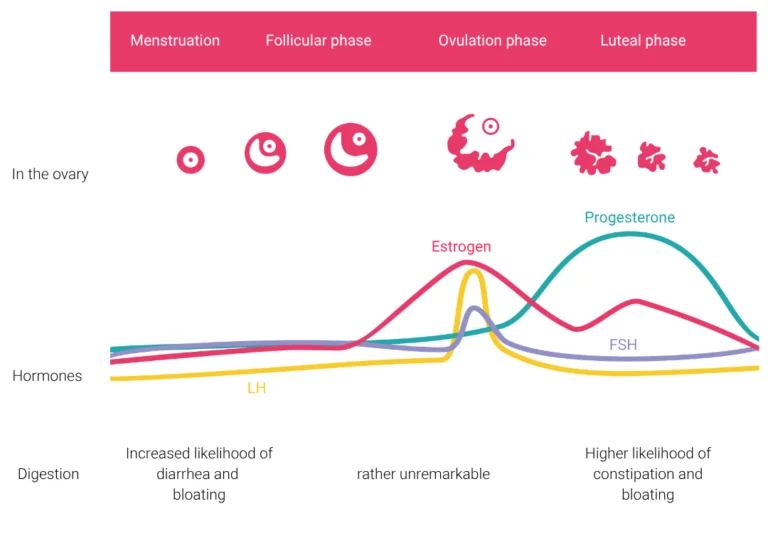
Follicular phase & ovulation: High estrogen levels and low progesterone levels usually result in uneventful, calm digestion.
Luteal phase: The hormone progesterone relaxes and slows down bowel activity—typical consequences include constipation and a bloated stomach.
Menstruation: The tissue hormone prostaglandin stimulates contractions of the uterus and intestines. The sharp drop in progesterone intensifies this effect—often leading to diarrhea and cramps.
Quick Relief: A high-fiber diet and plenty of water help relieve constipation before your period; warmth and easily digestible foods soothe the intestines during menstruation.
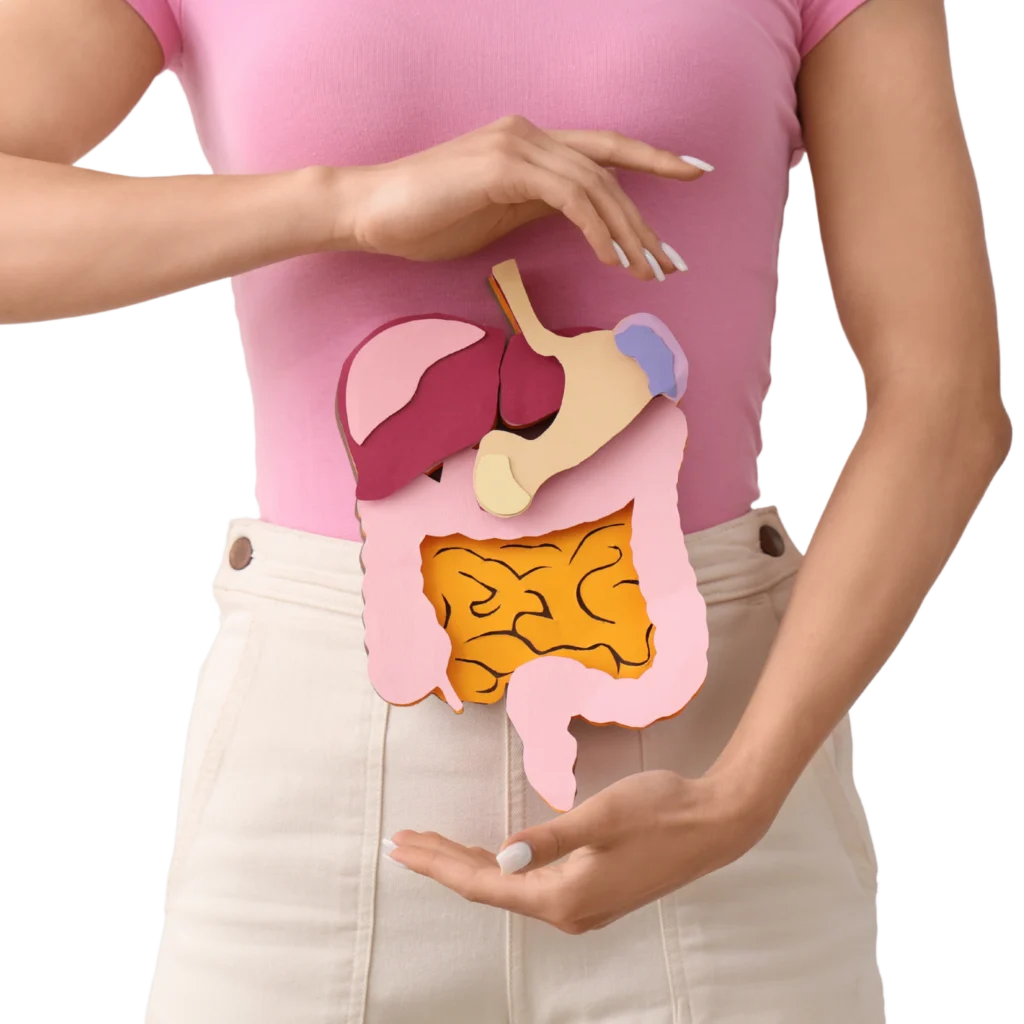
Do bloating, diarrhea, and constipation sound familiar—especially during certain phases of your cycle? You’re not alone: Many women and people with a menstrual cycle experience various digestive issues during different phases of their cycle. We’ll explain how your hormones affect your digestion, which symptoms are typical during which phase of your cycle—and how you can support your gut when problems arise!
The Stages of Silent Digestion
During the follicular phase—that is, the phase in which the follicles mature—estrogen levels rise. At the same time, progesterone levels remain low, so digestion is largely unremarkable during this phase. However, increased bowel motility may occur, leading to bloating. At ovulation, estrogen levels peak while progesterone levels remain low. Digestion also remains normal during this phase.
Which hormone causes constipation?
After ovulation, estrogen levels do drop again, but the hormone progesterone is now dominant. Progesterone has anti-inflammatory effects and relaxes the muscles—including those in the intestines. This slows down intestinal activity, which can lead to constipation and a bloated stomach. So if you’re experiencing constipation right now—don’t worry! You’re not alone. Our Instagram Story poll found that 63% of participants (969) experience a bloated stomach after ovulation.
By the way, digestive issues during the luteal phase are also among the typical symptoms of PMS, or premenstrual syndrome.
Why do I have diarrhea during my period?
Some women and people with a menstrual cycle experience diarrhea during their period, in addition to symptoms such as abdominal cramps, headaches, and nausea. This frequent occurrence during menstruation is linked to the fact that progesterone levels are at their lowest during this time. Digestion is stimulated again, leading to more frequent bowel movements. Another trigger for diarrhea during your period is the hormone prostaglandin: Unlike progesterone, this tissue hormone promotes inflammation and triggers contractions in the uterus to shed the uterine lining. Since the uterus and the intestines are located close to each other, these cramps can also affect your digestion. As a result, bowel function increases, which can lead to diarrhea, bloating, and more frequent bowel movements. So you’re not alone in experiencing these symptoms, and there’s absolutely no reason to be ashamed of them: In our community, a Story poll on Instagram revealed that 79% of the 1,106 voters said they experience diarrhea during their period—and as many as 84% of the 686 participants experience bloating during menstruation.
Can I prevent the formation of prostaglandins?
It is probably not possible to completely prevent the release of these spasm-triggering tissue hormones. However, the production of prostaglandins is stimulated, among other things, by arachidonic acid. Arachidonic acid is an omega-6 fatty acid and is found in animal-based foods. Pork is the primary source of arachidonic acid. Examples include lard, bacon, liver sausage, salami, and meat sausage. Egg yolks, chicken thighs, and butter also contain these omega-6 fatty acids. So be sure to consume these foods only in small amounts.
What Can Help You If You're Constipated
If you suffer from constipation during the luteal phase (before your period), we have a few simple tips that can help you:
- Exercise
- Fiber
- Enough water
- Psyllium husks
Physical activity can help get your bowels moving again. Light yoga exercises or a walk are enough. You can also support your digestive system through your diet. Fiber helps stimulate bowel movements as well. This means you should focus on whole grains, fruits, vegetables, and flaxseed. Don’t forget to drink enough water and to gradually get your digestive system used to the new amount of fiber. You can find psyllium husks at drugstores. Just one tablespoon a day can help support your digestion.

What Can Help With Diarrhea
Even if you have diarrhea, simple home remedies can help relieve the symptoms. These include:
- Plenty of water
- Fruit, such as bananas, apples, and blueberries
- Tea (black and green)
- Cocoa and dark chocolate
- Rice and rusks
- Psyllium husks and healing clay
- Nutmeg
To replenish the fluids lost due to diarrhea, you should drink plenty of water. Rice, bananas, and rusks are foods that are gentle on the stomach and are therefore suitable for acute cases of diarrhea. There are also some foods that thicken the stool and can thus help relieve diarrhea. These include, for example, blueberry tea, healing clay, grated apple, cocoa, black and green tea, dark chocolate, and blueberries. Psyllium husks can not only help with constipation; they can also support your natural digestion when you have diarrhea. When you eat foods containing nutmeg, they pass through the intestines more slowly, which can help alleviate diarrhea.
You should avoid the following products when you have diarrhea. They have a laxative effect or irritate the intestines:
- Cold beverages, coffee, sodas, fruit juices, alcohol
- Fatty foods
- Sugar substitutes
- Products containing lactose
Can dietary supplements help?
For many conditions, such as bloating or constipation, as well as PMS, hormonal acne, and other cycle-related issues, it can certainly be helpful to support your body with dietary supplements.
However, you should make sure to take only high-quality nutrient complexes whose ingredients are based on current scientific studies. After all, you want to do your body a favor, not burden it further with low-quality additives.
How trackle Helps You Understand Your Menstrual Cycle Symptoms
Unfortunately, trackle can’t prevent your digestive issues. However, our sensor system can help you determine whether your symptoms are related to your cycle or not, providing you with an initial assessment. If you have any health concerns, though, you should always consult your doctor.
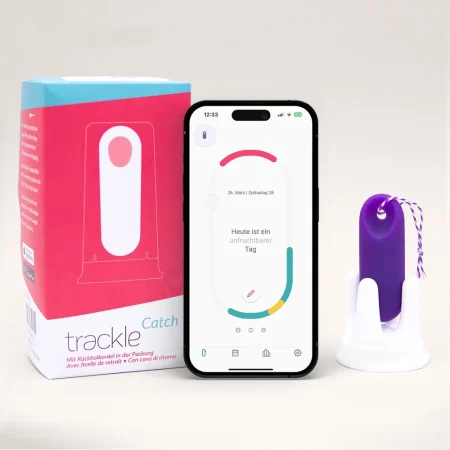
With the trackle sensor system, you’ll always know which phase of your cycle you’re currently in, because trackle reliably tracks your ovulation. By measuring your core body temperature at night and using your observations of cervical mucus, trackle analyzes your fertile and infertile days during your cycle (also known as the symptothermal method). The app’s simple interface eliminates the need for complicated calculations. With trackle, you can get up whenever you want, since the sensor is worn while you sleep—whether you work shifts or have been out partying all night. trackle not only helps you get to know your natural cycle but also provides reliable birth control or supports your efforts to conceive.
Learn more here about the trackle cycle computer, the approved, hormone-free method of contraception:
Do you have any more questions?
When you understand your body better, it’s much easier to make sense of symptoms like changes in digestion during your cycle. If you’d like to know how to track your cycle using the symptothermal method, or if you have questions about trackle, feel free to check out our FAQs or contact our customer support. We’ll guide you every step of the way!
Sources
Verdauungsprobleme: Frauen häufiger betroffen. MedMedia.
Arachidonsäure. DocCheck Flexikon.
Arachidonsäure in Lebensmitteln. Gesundheitswissen.
Bewegung für das Verdauungssystem. DAK.
This article was last updated on October 12, 2026.