Breast Cancer Screening: How to Perform a Breast Self-Exam Correctly
Goal: Detect changes in the breast early.
When: Once a month—preferably about one week after the start of your period.
Note: This does not replace your annual checkup at the doctor’s office!
5-Step Routine:
1. Visual inspection: Check the shape and skin in front of a mirror. 2. Palpation while standing: Use three fingers to feel for changes in a circular and linear pattern. 3. Check the nipple: Gently press (check for any discharge). 4. Palpation while lying down: Repeat the examination while lying on your back. 5. Check the armpit: Feel for lumps or hard areas.
Regular breast self-exams are a simple but valuable step in breast health:
They help you become familiar with the normal appearance and feel of your breasts so that you can notice changes early on.
Although they are not a substitute for a medical exam or a mammogram, if you discover something unusual, you can take action early.
Important: The goal is to establish a routine that helps you stay attuned to your body.
When and how often?
You should check your breasts once a month so you can get a good sense of any changes.
If you have menstrual cycles, you should check your breasts about a week after your period starts. Your breasts are usually less swollen or tender at that time.
If you no longer have periods or have irregular cycles, you should choose a specific day each month that’s easy for you to remember.
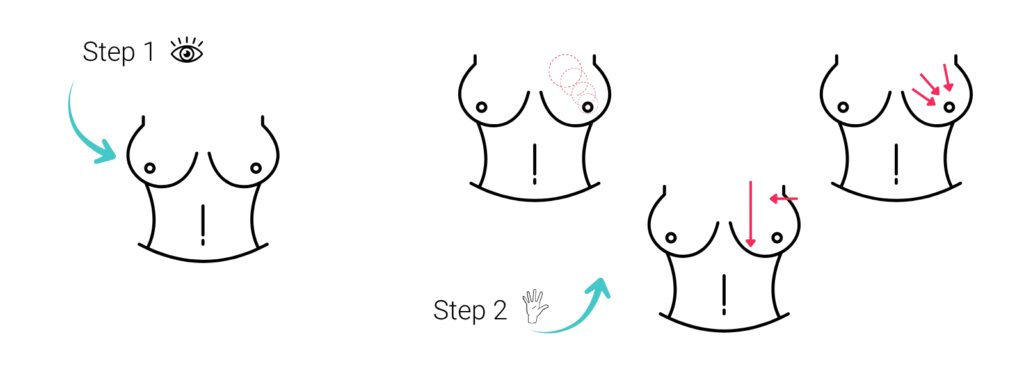
Step 1: Visual Inspection
Stand in front of a mirror and let your arms hang loosely at your sides. Look closely at your breasts and watch for any changes. By the way, it’s very rare for your two breasts to look exactly the same.
Then slowly raise your arms and let them drop again. Pay attention to how your breasts and nipples move, and note any skin folds or bulges that appear.
Step 2: Breast Self-Exam
Place the hand on the side where you’re examining your breast behind your head. Using themiddle three fingers of your other hand, you can now examine your breast. Apply pressure evenly as you go. Here’s how to examine your breast:
Start with circular motions from the outside toward the center. The circles should get smaller as you move toward the nipple.
Then examine your breast instraight lines, moving from top to bottom and from the outside toward the center.
Finally, examine your breast in straight lines from the outside toward the nipple.
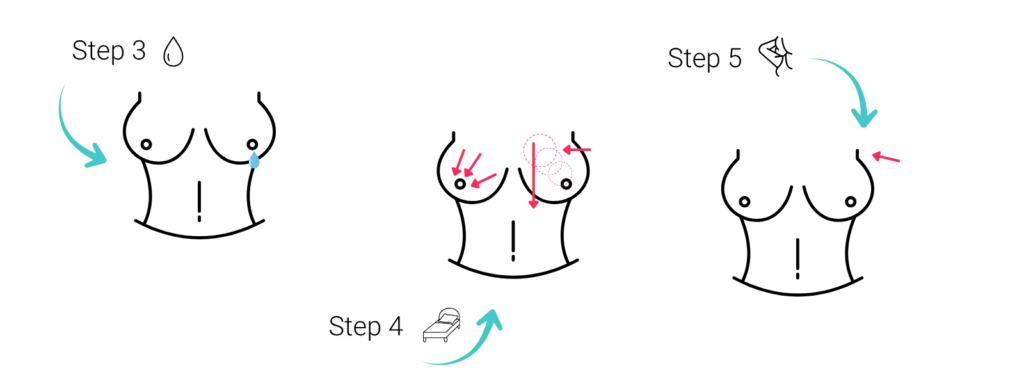
Step 3: Nipple Examination
Gently squeeze the nipple between your thumb and index finger. If you notice any colored discharge or fluid, you should visit a gynecologist’s office.
Step 4: Palpation While Lying Down
Now lie on your back and repeat the breast self-exam using the three movements.
Step 5: Check your armpits
To check your armpits, raise one arm high above your head. Gently press along your chest wall and check for any hard lumps.
Regular breast self-exams are an important step in the early detection of breast cancer, but they are not a substitute for checkups with your gynecologist. If you are unsure or notice anything unusual, please visit a gynecologist’s office.