
What can influence basal body temperature? Interfering factors in the symptothermal evaluation
The symptothermal method can be used to reliably determine whether you have already ovulated during your cycle:
After ovulation, your basal body temperature rises by at least 0.2°C. This rise is caused by the hormone progesterone and lasts until the next menstruation. This is also known as a temperature plateau.
However, certain circumstances can cause your core body temperature to rise briefly even though you have not yet ovulated during your cycle.
In this article, we explain what these circumstances can be, when you should enter them in the trackle app – and why it is safe to use trackle to analyze your temperature before ovulation despite an elevated temperature.
What are interfering factors?
Interfering factors or disturbances refer to circumstances that can affect your core body temperature without ovulation having occurred yet.
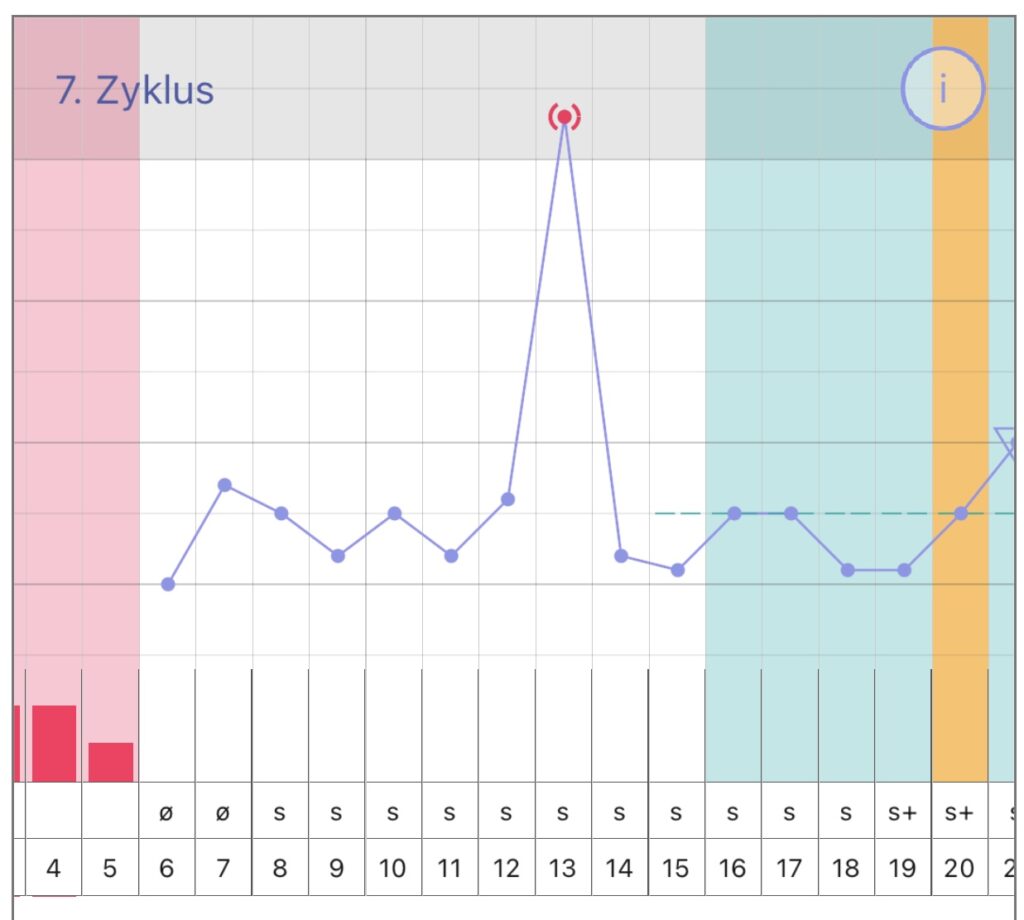
You can recognize a disrupted temperature value when your temperature suddenly rises for one or two days and then falls again, as in this example cycle:
What can cause disrupted basal values to occur?
Common interfering factors that can affect basal body temperature include:
- Cold or illness
- Unusual alcohol consumption
- Short/disturbed sleep
- Stress
- Time zone changes
- Drug use, and more.
Very important: Each of us is different and reacts differently to various life circumstances.
When do I enter an interfering factor into the app?
If you have an interfering factor for a day and observe that the temperature value is higher than the temperatures before and after, then you select an interference for that day in the trackle app under the purple tab.
This day will then be marked in red on your cycle chart, and the temperature value will not be included in the analysis of your cycle.
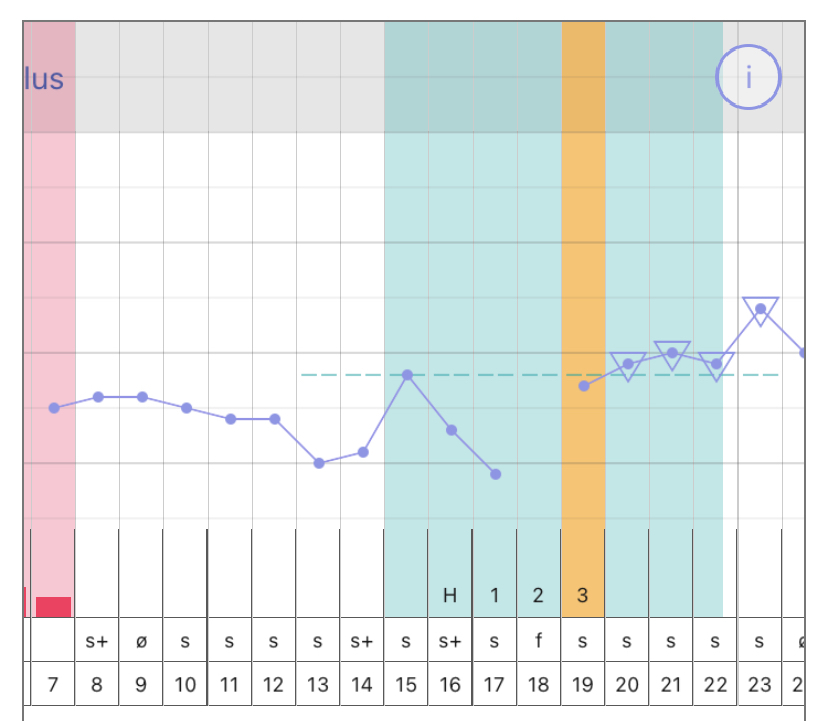
However, not every interfering factor must also change your basal body temperature: If a situation in the list applies to you but you do not notice any influence on your measurements, you do not select an interference in the trackle app, as in this example:
In this cycle, there is a temperature value on day 15 that is higher than the values before. However, since there was no interfering factor on this day, this value was not marked as interference in the trackle app and was therefore included in the trackle analysis.
Is my analysis still reliable despite interferences?
Yes, it is. By excluding the values that are elevated due to an interfering factor, they are not included in the trackle analysis. So, trackle waits for the correct temperature shift before confirming your ovulation.
Furthermore, with the symptothermal method, you are on the safe side because besides the rise in your basal body temperature, the evaluation also requires a peak in cervical mucus with at least three days of lower-quality cervical mucus.
These two body signs complement each other, making the symptothermal method significantly safer than, for example, the temperature method.
You can learn more about how the symptothermal method works and how trackle evaluates it here.