
Do I ovulate while taking the pill?
According to a representative survey by the German Federal Centre for Health Education (BZgA), 46% of sexually active 16- to 25-year-olds use the pill for contraception. It is therefore the second most frequently used contraceptive method in this age group, yet many girls and women know little about how the pill works and how it affects the female cycle. We’ll explain it to you: how the pill works, why you don’t ovulate when you’re taking the pill, and when ovulation resumes after you stop taking it. We will also introduce you to trackle as a hormone-free alternative to the pill.
What is ovulation?
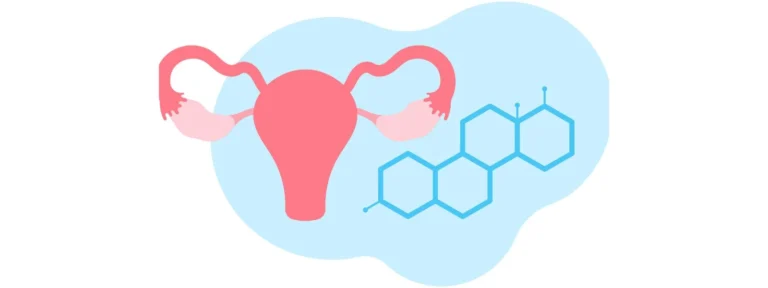
To explain what the pill does to your cycle, we’ll first show you what happens before and after ovulation. Your cycle begins on day 1 of your period; this phase is also called the follicular phase. During this time, follicles mature, and your body prepares for a potential pregnancy. The follicular phase ends with ovulation, the most important event in your cycle. If you’d like to learn more about ovulation, your cycle, and trackle, check out our free online webinar on hormone-free contraception (only available in German)!
After that, the luteal phase begins. The mature egg of the best quality is released from the ovary and travels through the fallopian tube to the uterus. During this time, it can be fertilized. If fertilization does not occur, the egg and the built-up uterine lining are shed – menstruation occurs, and a new cycle begins.
You can find more information about your cycle here.
What effect does the pill have on my menstrual cycle?
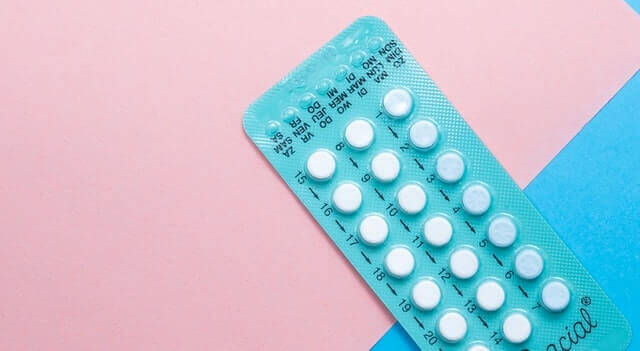
You’ve probably heard that the pill tricks your body into thinking it’s pregnant. That’s a common misconception (you can find more interesting myths about the female cycle here, by the way). The pill, through its combination of hormones, puts your body into a kind of permanent luteal phase, which is the phase after ovulation has already occurred.
But how exactly does the pill affect your hormone balance?
To understand this, here’s a brief explanation of how the hormones of the female cycle work. You can find a more detailed explanation in our other blog post about the female cycle. The hormones FSH and LH cause the growth of a follicle, the subsequent ovulation, and the formation of a corpus luteum. Estrogen and progesterone, on the other hand, influence the uterine lining and cervical mucus production. The processes that occur during the female cycle depend on the fluctuations of these hormones, which also influence each other.
What processes change in the body?
The pill affects your hormone balance. The release of the hormones LH and FSH, which normally occurs in the pituitary gland, is inhibited, and thus ovulation is also prevented. The hormones estrogen and progesterone, on the other hand, are kept at a very constant level by taking the pill, resembling the state during the luteal phase.
This phase actually begins after ovulation. The pill suppresses the natural interplay of hormones that trigger various processes in the cycle. Therefore, the body is not tricked into thinking it’s pregnant. Instead, it remains permanently in a state that closely resembles the luteal phase. Your body ‚thinks‘ that ovulation has already occurred. In a regular cycle, a so-called corpus luteum would form after ovulation, which is responsible, among other things, for the production of progesterone, which in turn influences your cycle. The pill also prevents your uterine lining from building up properly. Furthermore, the hormones in the pill alter the viscosity of the cervical mucus. It becomes thicker, making it impermeable to sperm – vaginal dryness is therefore a common side effect of the pill. However, cervical mucus is also an important element of fertility, as it helps sperm survive longer in the vaginal environment.
If you take a pill that requires a one-week break from taking it, you will experience bleeding during this break. This bleeding has nothing to do with a real menstruation, but is a withdrawal bleed. It occurs because the artificial hormone level, which was maintained by the pill for three weeks, suddenly drops.
I've stopped taking the pill: When will ovulation occur again?
You’re probably wondering when you’ll ovulate again after stopping the pill. Unfortunately, there’s no single answer to this question, as every woman’s body and cycle react differently to discontinuing the pill. However, a 2002 study showed that two-thirds of the participants ovulated in the first cycle after stopping the pill. This means that most women experienced a ’normal‘ cycle with menstruation. Nevertheless, your cycle might be longer, and your period might arrive a little later than you’re used to. Since your body needs time to regulate itself again, it’s also possible to have a cycle without ovulation and therefore without a period initially. However, this is usually temporary. If you’re still concerned or if you don’t ovulate for an extended period, it’s advisable to consult your gynecologist.
Stopped taking the pill: How you can still prevent pregnancy safely
Are you considering stopping the pill, but unsure how you can reliably and safely prevent pregnancy in the future without compromise? We have something for you. trackle helps you prevent pregnancy hormone-free and safely. With the help of the cycle computer, you can reliably track your basal body temperature. By entering your cervical mucus quality into the specially designed app, you can identify which days you are fertile and which you are not.
Sources:
Bundesinstitut für Arzneimittel und Medizinprodukte/ Paul-Ehrlich-Institut (2019): Bulletin zur Arzneimittelsicherheit. Informationen aus BfArM und PEI
Casey, E. F. (2023): Orale Kontrazeptiva
DocCheck Flexikon (2024): Orales Kontrazeptivum
Faller, A./ Schünke, M. (2012): Der Körper des Menschen. Einführung in Bau und Funktion, Stuttgart.
Gnoth, G./Frank-Herrmann, P./Schmoll, A./ Godehardt, E./ Freundl, G. (2002): Cycle characteristics after discontinuation of oral contraceptives