When does the first ovulation occur after childbirth?
When the first ovulation occurs and fertility returns after childbirth varies greatly from woman to woman. The timing primarily depends on whether and how regularly a woman breastfeeds her child. Women who do not breastfeed or only partially breastfeed typically resume ovulation relatively soon after childbirth and thus also regain a normal menstrual cycle. Studies have shown that up to 50% of non- or partially breastfeeding women experience menstruation within the first six weeks after childbirth. For women who breastfeed for an extended period, it may take several months. Complex hormonal processes, involving the milk-producing hormone prolactin, play a role in this.
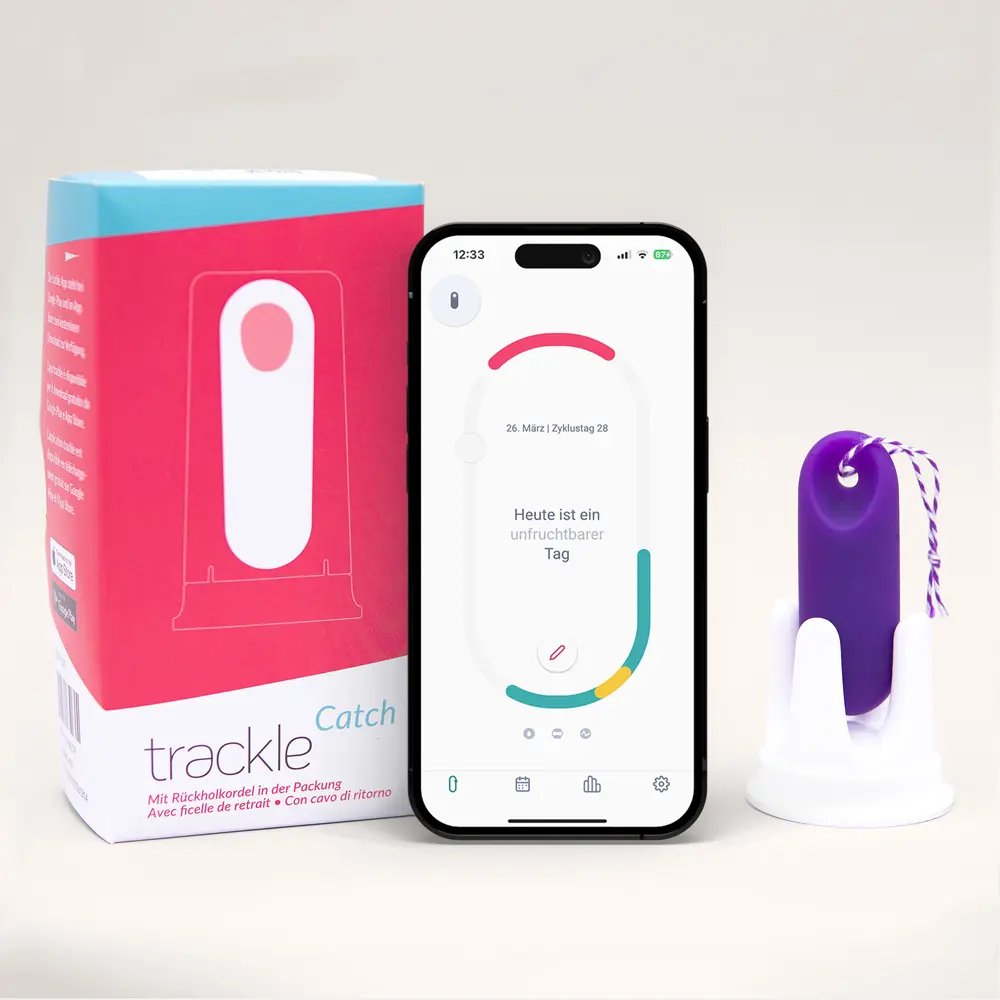
When can I start using trackle again after the birth to determine my fertility?
During the breastfeeding period, initially, no cycle occurs, or it takes time for the first ovulation to occur again. The timing of this event depends on the release of the hormone prolactin. During this time, one should assume fertility because this first ovulation occurs BEFORE the first menstruation resumes – thus, it goes unnoticed.
However, trackle requires a complete cycle for evaluation (and also for predictions for the next cycle), meaning from the first day of menstruation to the first day of the next menstruation with a trackle-detected ovulation in between. Therefore, trackle cannot detect this very first ovulation.
Hence, after childbirth, you can only resume using trackle for contraception once your first menstruation has occurred.
Source: Natürlich & sicher: Das Praxisbuch. Sichere Empfängnisregelung ohne Nebenwirkungen. Familienplanung mit sensiplan. Mit dem richtigen Timing zum Wunschkind (18. Aufl.). (2011). TRIAS.