Cervical Mucus & Fertility - Everything You Need to Know
Cervical mucus helps you determine your fertility. By observing the consistency of the mucus throughout your cycle, you can determine whether ovulation is approaching or has already passed. Observing cervical mucus is straightforward and an important component of the symptothermal method. Here you will learn about the different phases of cervical mucus, how it feels and looks, and how you can gather clues about your fertility through it.
All Details About Cervical Mucus
What is Cervical Mucus?
Cervical mucus is a secretion produced by the glands in the cervix. It protects against pathogens and prepares the vaginal environment optimally for fertilization. Cervical mucus changes its consistency throughout the menstrual cycle, indicating when you are most fertile.
How can I tell if I am fertile based on cervical mucus?
Cervical mucus changes throughout the menstrual cycle. At the beginning, it may not be present at all, then it may appear whitish and creamy - and as you approach ovulation, the mucus becomes thinner and more stretchy. This indicates that ovulation is approaching. You are fertile only around the time of ovulation.
What does cervical mucus look like during ovulation?
The thinner and more stretchy the cervical mucus, the closer you are to ovulation. After ovulation, the appearance of the mucus changes significantly - it becomes creamier, sometimes clumpy, or may even disappear altogether.
How do you observe cervical mucus properly?
It's best to observe cervical mucus daily - between your fingers or on toilet paper. Most women can categorize their observations quite well using the symptothermal method of family planning.
How does cervical mucus change throughout the menstrual cycle?
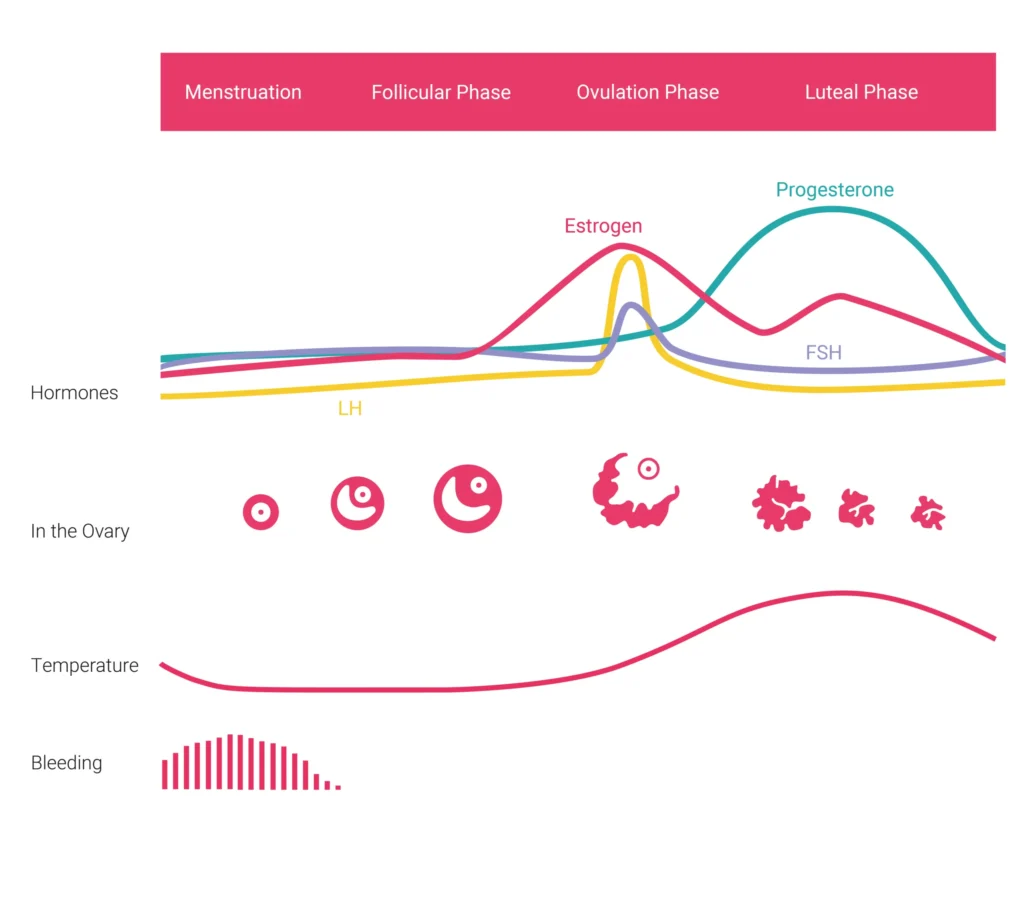
„Throughout your cycle, cervical mucus changes under the influence of the hormones estrogen and progesterone. This makes it an important indicator of your current cycle status, providing insight into where you are in your cycle.
The hormone estrogen is produced by the developing follicles before ovulation. As estrogen levels rise, cervical mucus becomes more liquid: it becomes clearer and more stretchy. The pH of estrogen-rich cervical mucus is alkaline, which can protect the entering sperm from the acidic environment of the vagina.
After ovulation, the hormone progesterone is produced by the corpus luteum. As progesterone levels increase, cervical mucus becomes thicker and drier. It no longer flows down the vagina and seals the cervix. This helps protect the body from the entry of pathogens.“
Observing cervical mucus correctly!
Cervical mucus can be observed in various ways: through sensation, touch, and sight. Since the hormone concentration changes throughout the day, it’s important to observe cervical mucus throughout the day. To observe the quality of cervical mucus effectively, simply wipe with your finger or toilet paper over the vaginal opening (preferably before urination to avoid confusion from urine) and consider the following:
How does the vaginal opening feel? Is it dry, moist, or perhaps even wet? How does the cervical mucus feel? Does it feel slippery or slick? What does the cervical mucus look like? Can you see it? What color is it?
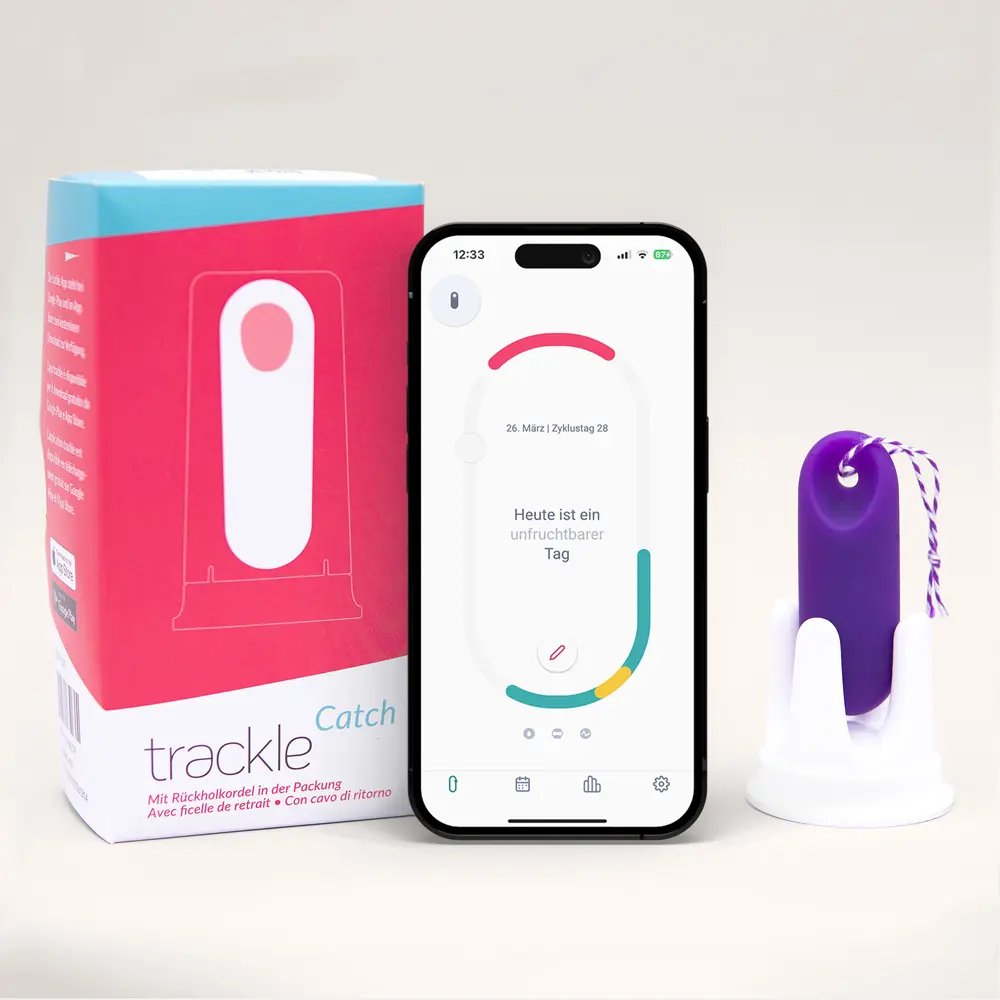
If you’re using trackle, it’s important to enter your observations into the trackle app using the standardized buttons. Only if both cervical mucus evaluation AND temperature evaluation are possible will trackle confirm your ovulation. You can find the abbreviations offered by the app for cervical mucus evaluation a bit further down or here in the video.
Phase 1: Scant Cervical Mucus
After menstruation, your vaginal entrance often feels dry, and cervical mucus begins to increase again. You may then feel it as a moist sensation without necessarily seeing it.
Phase 2: Creamy cervical mucus
As the follicle matures and prepares for ovulation, you can also observe this through your cervical mucus. It appears cloudy, whitish, or yellowish and is thick, creamy, lumpy, sticky, or viscous, and not stretchy.
Phase 3: Glassy Cervical Mucus
As you approach your ovulation and become fertile, you produce more cervical mucus, and its quality improves. Better quality in this case means clear, glassy, and transparent. Sometimes it may have a slight yellowish tint or contain white streaks. It’s stretchy and feels slippery and slick. Sperm thrive in this environment.
Phase 4: Dryness after ovulation
After your ovulation, the cervical mucus becomes cloudy and clumpy again, or it may stop altogether. It feels as if your vaginal entrance is completely dry once more.
What does cervical mucus have to do with Fertility Awareness?
„Observing cervical mucus can help you monitor your cycle. It changes throughout your cycle due to hormonal influences. Cervical mucus is therefore a bodily sign that helps you recognize whether you can conceive or not.
However, research has shown that it is safer to observe two bodily signs for contraceptive purposes: cervical mucus AND basal body temperature. Therefore, the safest method for hormone-free birth control is the symptothermal method. It provides criteria for how to properly observe and evaluate your cervical mucus and basal body temperature. The symptothermal method helps you determine whether you are currently fertile or not. „
What do the cervical mucus abbreviations mean?
d ("lowest" quality)
Sensation: dry, rough, itching, unpleasant feeling AND
Appearance: no visible mucus
⌀
Sensation: no mucus felt; no moistness; presence of mucus not sensed at the vaginal opening AND
Appearance: no visible mucus
m
Sensation: moist BUT
Appearance: nothing observed, no cervical mucus at the vaginal entrance
s
Sensation: moist but presence of mucus not sensed AND
Appearance: thick, whitish, opaque, creamy, lumpy, yellowish, sticky, milky, non-elastic or tough
S+ ("höchste" Qualität)
Here are two possibilities:
1. Option:
Sensation: moist but presence of mucus not sensed AND
Appearance: transclucent, clear, transparent, translucent with white streaks, like raw egg whites, elastic or stretchy – can be stretched into strands, runs like water, reddish, red-brown, yellowish-red

2. Option:
Sensation: wet, slimy, slippery, lubricating, like oil, smooth AND / OR
Appearance: transclucent, clear, transparent, translucent with white streaks, like raw egg whites, elastic or stretchy – can be stretched into strands, runs like water, reddish, red-brown, yellowish-red