
Pearl Index and Contraceptive Effectiveness
The Pearl Index: The standard metric for directly comparing the reliability and safety of contraceptives.
Methods vs. Usage: Why you must always distinguish between perfect usage (method effectiveness) and typical usage (user effectiveness) when it comes to safety.
Hormonal Methods: The pill and IUD are theoretically very safe, but carry the risk of side effects and everyday usage errors.
Symptothermal Method: The combination of basal body temperature and cervical mucus is hormone-free and, according to the Pearl Index (0.4), just as safe as the pill.
Safe with trackle: How the smart sensor system minimizes application errors by evaluating data according to the official rules of the symptothermal method.
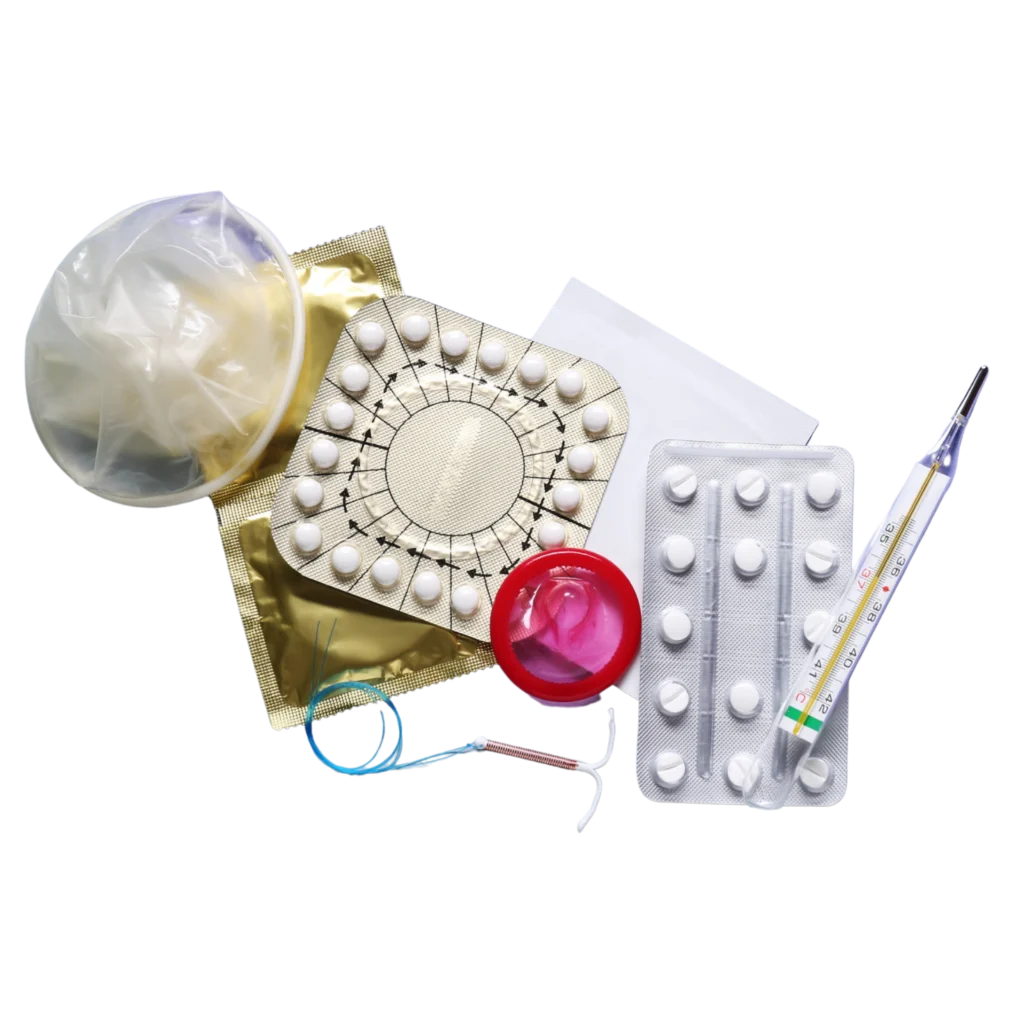
The “Pearl Index” is commonly used to evaluate the safety and effectiveness of various contraceptives. But what does this index tell us, how is it calculated, and are these calculations really that reliable? Here, we answer the most important questions about the Pearl Index.
What is the Pearl Index?
The Pearl Index is intended to provide information about the effectiveness of a contraceptive method. It interprets the collected data on a specific contraceptive method to show how many out of 100 users became pregnant over the course of a year despite using that method.
Thus, a Pearl Index of 2 means that 2 out of 100 women—despite using a specific contraceptive method—became pregnant within a year. This is also referred to as a “failure rate” of 2%.
It’s important to note that no contraceptive method has a Pearl Index of 0. In other words: No matter which contraceptive method you choose, there is always a risk of becoming pregnant during sexual intercourse. Nevertheless, some contraceptive methods are significantly safer than others and can be compared using the Pearl Index. You’ll find an overview of various methods and their effectiveness according to the Pearl Index below.
How is the Pearl Index calculated?
The lower the Pearl Index, the higher the level of protection provided by a contraceptive method. But how is the Pearl Index actually calculated?
The calculation is based on 1,200 months of use (100 women over the course of one year) of a contraceptive method. The index determines how many of these 100 women became pregnant within one year while using the respective contraceptive method.
For example, a Pearl Index of 2 means that 2 out of 100 women became pregnant in one year. If the Pearl Index is 0.05, for instance, then one out of 2,000 women became pregnant within one year.
Perfect Usage vs. Typical Usage
Even though the Pearl Index provides a good benchmark for comparison in theory, there is a catch: In most cases, its figures are based on the perfect use of a contraceptive method, also known as “method effectiveness.”
In reality, however, there are many factors that can affect the perfect use of contraception, such as consistent use, drug interactions, the impact of illnesses, and general errors in use.
To compare the everyday use of a contraceptive as realistically as possible, the value for typical use (or “user effectiveness”) should also be taken into account.

Pearl Index for Hormonal Methods
Hormonal birth control methods include, for example, the birth control pill and the hormonal IUD.
In 2023, the birth control pill was surpassed by condoms as the most commonly used method of contraception for the first time. This is confirmed by a representative study conducted by the Federal Institute for Public Health, in which sexually active men and women in Germany were surveyed about their contraceptive practices: Only about 38% of respondents who use contraception reported that they or their partner take the pill.
According to the Pearl Index, it has a failure rate of 0.3–1% and is therefore one of the safest forms of birth control when used perfectly. However, this safety comes at a high price, as the list of side effects is long: weight gain, blood clots, hormone-related mood swings, migraines, and nausea are just a few of the many possible side effects.
The pill also doesn’t fare as well when used under typical conditions. This is because, for example, irregular use, drug interactions, or gastrointestinal disorders can significantly impair the effectiveness of the hormonal contraceptive.
The hormonal IUD is also a form of hormonal contraception. While having it inserted by a gynecologist can prevent user error, making its typical use just as safe as perfect use, the use of synthetic hormones can also lead to significant side effects.
Incidentally, the widespread assumption that the contraceptive effect of the IUD or the contraceptive ring is only “local” is incorrect:
The synthetic hormones are released into the bloodstream through the mucous membrane and thus spread throughout the body.
Pearl Index for Natural Methods
Unfortunately, there is a widespread belief that natural family planning is very unreliable and is really only suitable for family planning. The fact that natural family planning is generally perceived as very unreliable is, unfortunately, due to the prevalence of highly unreliable methods such as the calendar method or coitus interruptus. As can be seen from failure rates of up to 22%, such methods are quite rightly frowned upon and are not suitable for contraception.
Another unreliable method of natural family planning (NFP) is the temperature method, which is based solely on monitoring basal body temperature and is therefore not recommended for contraception. Important: The temperature method is NOT the symptothermal method and should not be confused with it!
The symptothermal method (STM) is the most reliable NFP method, in which, in addition to basal body temperature, another bodily sign (cervix or cervical mucus) is monitored. When used perfectly, the STM has a Pearl Index of 0.4. Even with typical use—which takes user errors into account—it has a failure rate of only 1.8, making it even safer than the pill. The method involves no side effects, artificial hormones, or copper. As you can see, a safe and hormone-free method of birth control does exist!
Since 2024, the symptothermal method has been officially recommended as a safe, natural method of contraception in the new guidelines of the German Society for Gynecology and Obstetrics (DGGG).
Hormone-Free Birth Control with trackle
The symptothermal method is based on specific calculation rules that have been researched and established through several independent studies. To use the symptothermal method safely and correctly, these rules must be applied and interpreted correctly.
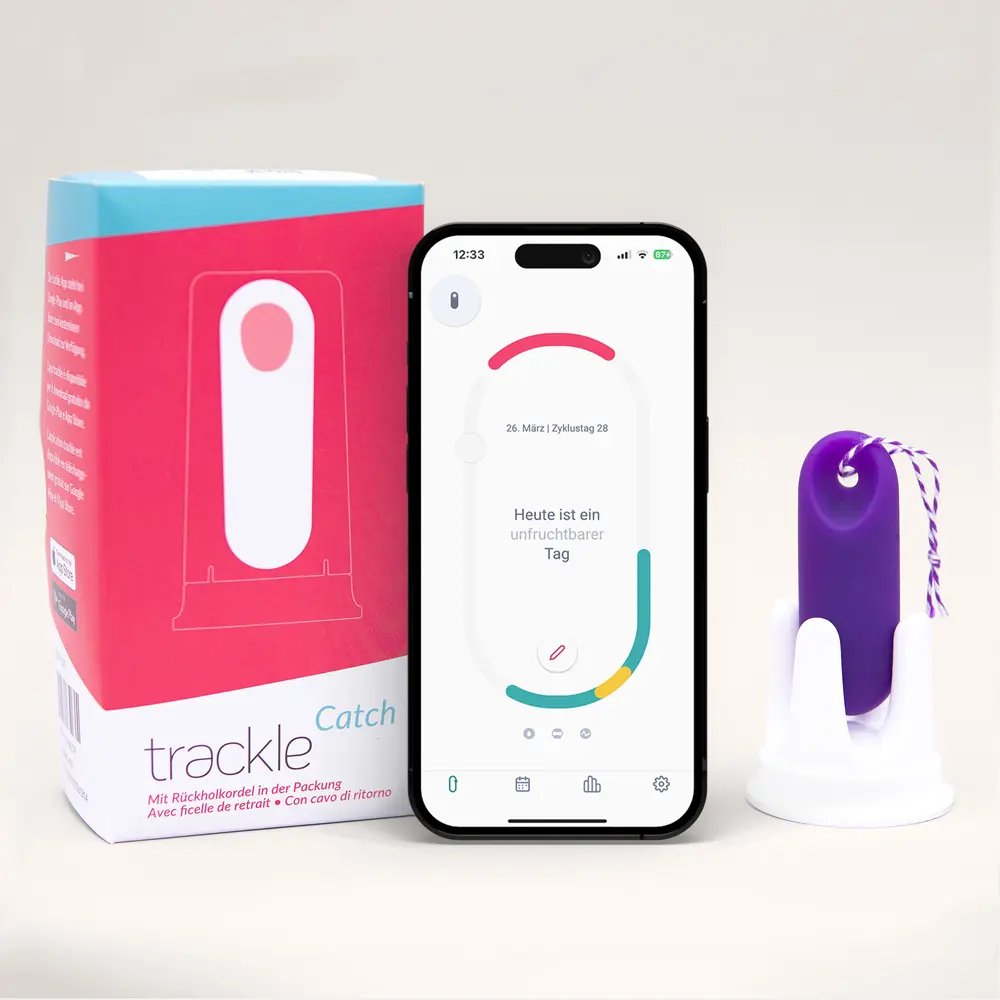
And that’s where trackle comes in: The trackle cycle computer digitizes the symptothermal method and helps you use it safely and easily. trackle is specifically designed to prevent potential errors in applying the symptothermal method and makes it incredibly easy to use in everyday life: The sensor automatically records and transmits temperature data and always applies the rules correctly.
Do you have any more questions?
If you’d like to know how reliable the symptothermal method is with trackle in everyday life, or if you have general questions about our cycle tracker, feel free to check out our FAQs or contact our customer support. We’ll guide you step by step on your journey to safe, hormone-free birth control!
Sources:
- Diedrich, K. et al.: Gynäkologie und Geburtshilfe. 2. Auflage. Heidelberg. 2007
- Frank-Herrmann, P. et al.: Natürliche Familienplanung heute. Modernes Zykluswissen für Beratung und Anwendung, 6. Auflage. Heidelberg, 2020
- Verhütungsmethoden. Bundesinstitut für Öffentliche Gesundheit
- Der Pearl Index, Universitätsklinikum Tübingen – Department für Frauengesundheit
- BIÖG-Studie: „Verhütungsverhalten Erwachsener 2023“
This article was last updated on October 9, 2026.