Implantation: Symptoms after fertilization
After fertilization, the egg implants itself in the uterus, a process known as implantation or nidation. Here, we explain the symptoms associated with this implantation.
What happens during fertilization
Every woman can only get pregnant during a specific window of time in her cycle, namely during her fertile days. The mechanism behind this is as follows: After ovulation, the egg can only be fertilized for 12 to 18 hours at most, which equates to a maximum of two days within a cycle. However, since sperm can survive in the female body for up to five days, your fertile window begins four days before ovulation and includes the day of ovulation. So, if you had unprotected intercourse up to 4 days before your ovulation day, there could still be fertilizable sperm waiting for ovulation to occur.
After ovulation, the egg travels from the ovary through the fallopian tube to the uterus, where it can be fertilized, a process that takes about two days. Thus, your fertile window consists of the four days before your ovulation, the day of your ovulation, and the two days afterward. If you have unprotected intercourse during this time, the egg can be fertilized by a sperm cell.
What happens during implantation
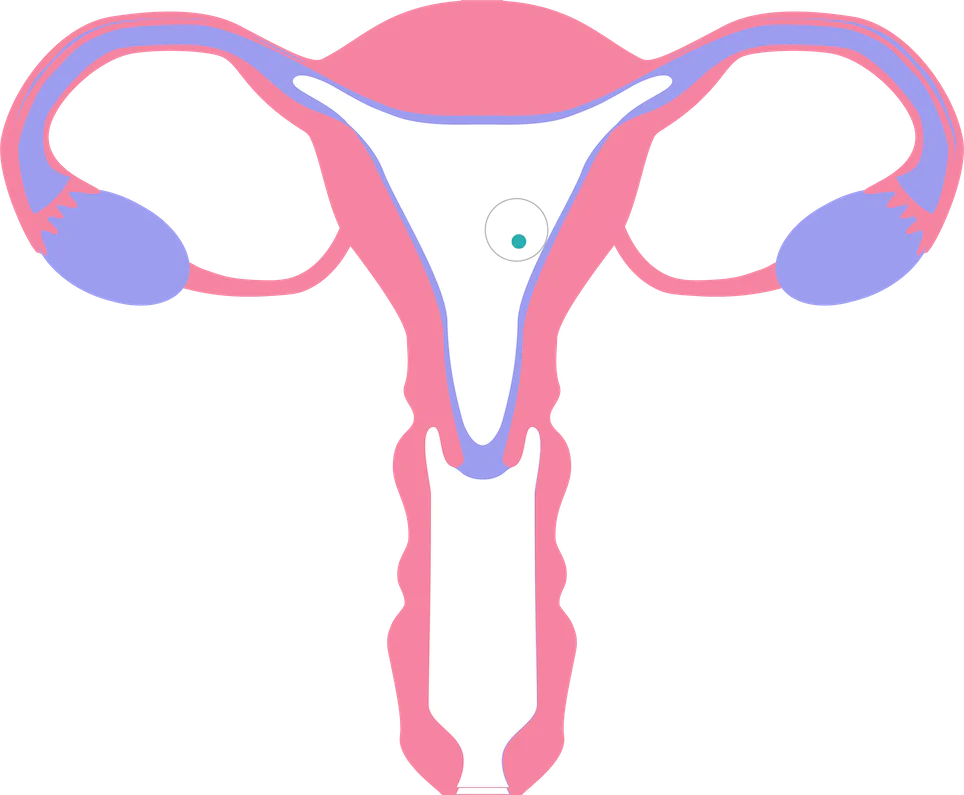
When the egg is fertilized, it implants itself into the uterus. You can imagine it as the fertilized egg attaching to the uterine lining. Throughout the preceding menstrual cycle, the uterine lining has been preparing to build a nest where the egg can thrive.
If implantation is successful, the body switches to ‚pregnancy‘ mode. This process takes about seven to eight days: the fertilized egg takes about five days to arrive in the uterine cavity, and then it takes a few more days for the egg to attach to and settle into the uterine lining. Below, you’ll learn more about the possible symptoms of implantation.
Symptoms: Can you feel implantation?
In fact, implantation can bring about symptoms. Some women can feel the nidation process. It may cause slight cramping in the lower abdomen and back. Additionally, spotting may occur – known as implantation bleeding – and some women also report a sensation similar to an impending urinary tract infection.
However, these symptoms are not very definitive and do not occur in every woman. A real confirmation of whether implantation has occurred can only be provided by a pregnancy test.