PMS and PMDD: Symptoms, Causes and Treatment Options
You probably know it too: breast tenderness, abdominal pain, cravings, or mood swings just before menstruation! The majority of all women and people with a cycle suffer from PMS. But what exactly is PMS, where does it come from, and what does the term PMDD mean? We address these intriguing questions in this blog post.“
What is PMS
PMS is an abbreviation for ‚Premenstrual Syndrome,‘ which refers to a variety of recurring, cycle-dependent ailments. A distinction is made between physical and psychological symptoms that occur during the luteal phase, the period after ovulation and before menstruation. Once a new cycle begins and menstruation starts, the PMS symptoms disappear and only reappear after the next ovulation.
The exact causes of PMS are still unknown. However, there are theories that suggest that the symptoms are partially caused by an imbalance of the sex hormones estrogen and progesterone. During the luteal phase, the body usually produces more progesterone while estrogen levels decrease. If the ratio is disrupted and individuals have too much estrogen or too little progesterone in their bodies, stronger PMS symptoms are expected. Another theory suggests that the happiness hormone serotonin decreases alongside estrogen levels during the luteal phase, and this effect is so strong in some individuals that particularly psychological PMS symptoms are triggered.
What PMS symptoms are there?
The symptoms vary greatly from person to person. Some may only experience them a few days before menstruation, while others may have symptoms throughout the entire luteal phase, beginning about two weeks before menstruation. The severity of the symptoms also varies greatly. As mentioned earlier, a distinction can be made between physical and psychological symptoms.
Some of the physical PMS symptoms include:
- Insomnia
- Headaches
- Abdominal pain
- Back pain
- Breast tenderness
- Digestive problems
- Acne
- Cravings
- Water retention
Some of the psychological PMS symptoms include:
- Depressive moods
- Sadness
- Irritability
- Aggression
- Inability to cope
- Fatigue
- Anxiety disorders
- Lack of drive
- Restlessness

How many people with a cycle suffer from PMS?
The majority of all individuals with a cycle experience mild PMS symptoms during the luteal phase, especially just before menstruation begins. Approximately 20-40% of individuals with a cycle report moderate PMS discomforts. And about 3-8% of individuals with a cycle suffer from very severe symptoms. In this case, when the symptoms reach a certain level of severity, it is referred to as PMDD symptoms.
PMS or PMDD – what’s the difference?
Premenstrual Dysphoric Disorder (PMDD) is an extremely burdensome variant of PMS (Premenstrual Syndrome) for those affected. The focus here is on the psychological symptoms. If these symptoms during the luteal phase are so severe that they affect the daily life of the individuals and significantly reduce their quality of life, it is referred to as PMDD. Like PMS, the symptoms disappear once menstruation begins and only reappear after the next ovulation. Although approximately 3-8% of individuals with a cycle suffer from PMDD, PMDD is relatively unknown compared to PMS.
Until now, the causes of PMDD have been unclear. Researchers suspected it to be a genetically predisposed sensitivity to fluctuations in the sex hormones estrogen and progesterone. However, according to a new study, the neurotransmitter serotonin seems to play a crucial role: researchers found that the density of serotonin transporters in the brain is increased before menstruation, which predisposes to serotonin loss and can trigger PMDD symptoms in those affected.
How can I determine if I am suffering from PMDD?
As the symptoms of PMDD overlap with those of many other (mental) disorders, a definitive diagnosis is often difficult. If you suspect you are suffering from PMDD, keeping a mood journal can help you determine when you feel particularly bad and if there are any cyclical patterns.
However, only your gynecologist can provide a final diagnosis. They will conduct a differential diagnosis, ruling out other possible conditions. This involves taking blood samples multiple times during your cycle to examine:
- Do you have a nutrient deficiency that could affect your mood?
- Do you have a progesterone deficiency?
- Do you have a thyroid or liver disease?
What could potentially help you:
In the case of PMDD, gynecologists often prescribe medications such as birth control pills or antidepressants. However, these only work while being taken and therefore do not offer long-term solutions. They merely alleviate symptoms without addressing the root cause. Moreover, they come with a lot of side effects.
On the other hand, a healthy lifestyle can help reduce both your PMS and PMDD symptoms. So, cut down on alcohol and coffee, engage in more exercise, and maintain a balanced and cyclical diet. Additionally, herbal remedies can be particularly helpful for depressive moods and anxiety.

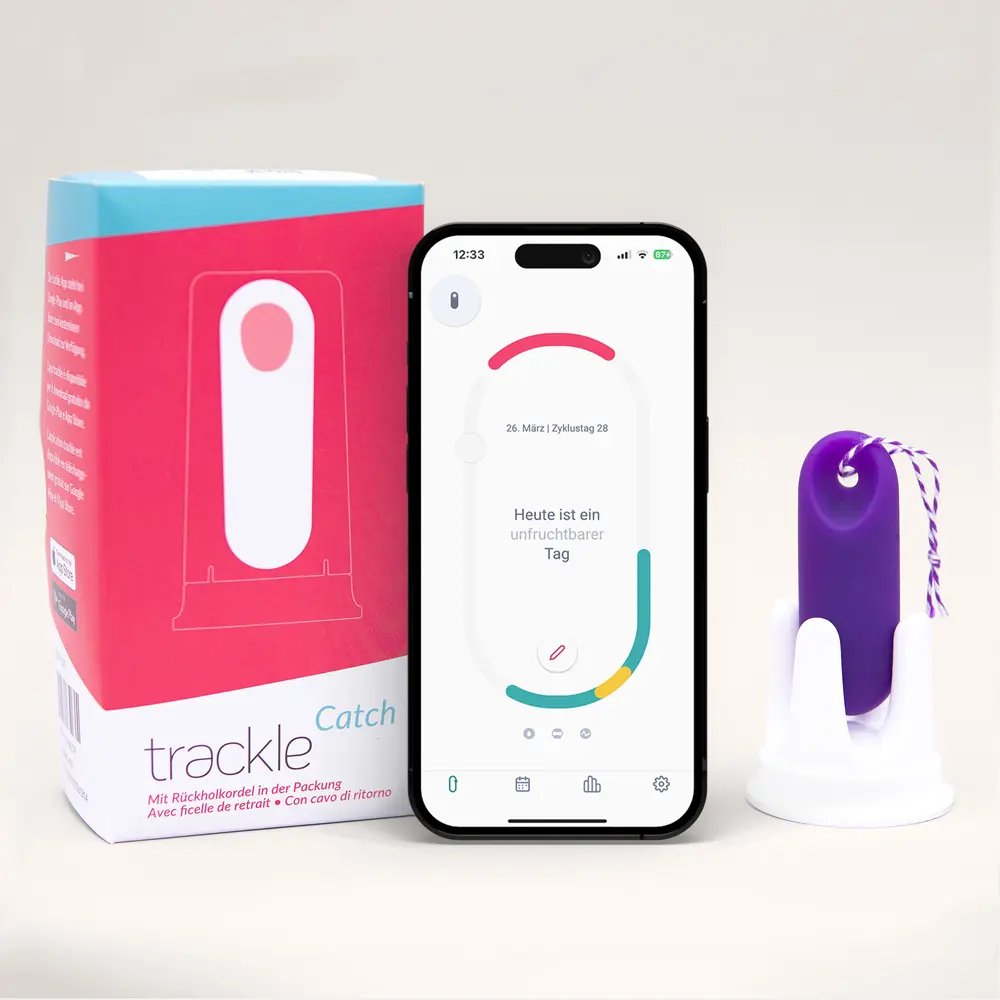
Unfortunately, trackle cannot alleviate the symptoms of PMS or PMDD. However, our sensor system can help you determine whether your symptoms are related to your cycle or not, providing you with an initial assessment. To do this, you can simply make regular notes about your symptoms in the trackle app and use it as a mood diary.
You can also discuss your cycle records with your gynecologist. trackle offers you the option to receive your cycle data via email. Just send an email to info@trackle.de for this purpose.
Sources (only available in German):
https://www.gesundheitsinformation.de/praemenstruelles-syndrom-pms.html
https://www.gelbe-liste.de/krankheiten/praemenstruelles-syndrom-pms