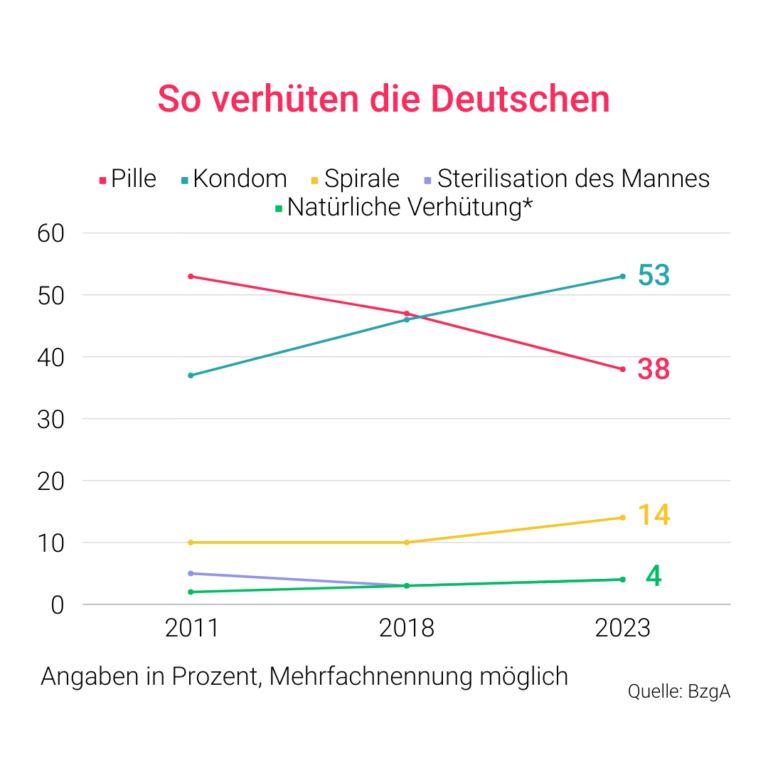
The pill and condoms remain the most important contraceptive methods in Germany, at least according to the data collected by the Federal Center for Health Education (BZgA) in 2023. Interestingly, compared to previous surveys, condoms as a contraceptive method have even surpassed the pill for the first time. Approximately 53% of respondents use condoms, while about 38% reported taking the pill. In 2011, the ratio was exactly the opposite – nearly 53% used the pill for contraception, while 37% relied on condoms:
*In der Studie der BZgA wurden unter “natürlicher Verhütung” die Kalendermethode, die Temperaturmethode und die Schleimbeobachtung zusammengefasst. Auf Rückfrage wurde uns mitgeteilt, dass die symptothermale Methode nicht separat abgefragt wurde, was wir sehr schade finden.
So, as a contraceptive, the pill is on the decline among sexually active Germans. However, what’s particularly intriguing is when we look at specific age groups: among 18 to 29-year-olds, the number of those using the pill has actually decreased by 26 percentage points.
This statistically confirms a trend that many of our users are aware of from their surroundings – and not least from their own experience: trust in hormonal contraception is declining, and more and more young women are choosing to stop taking the pill.
So, this is what Germans think about hormonal contraception.
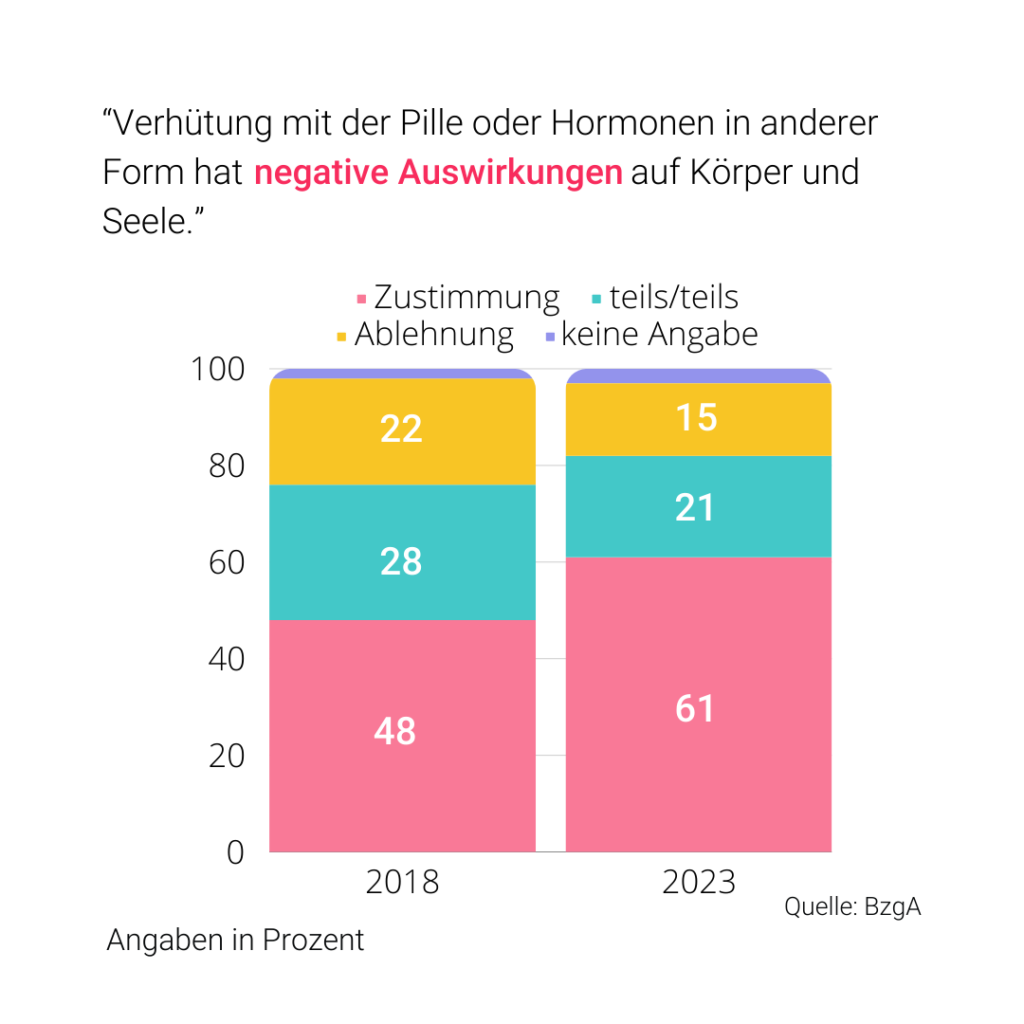
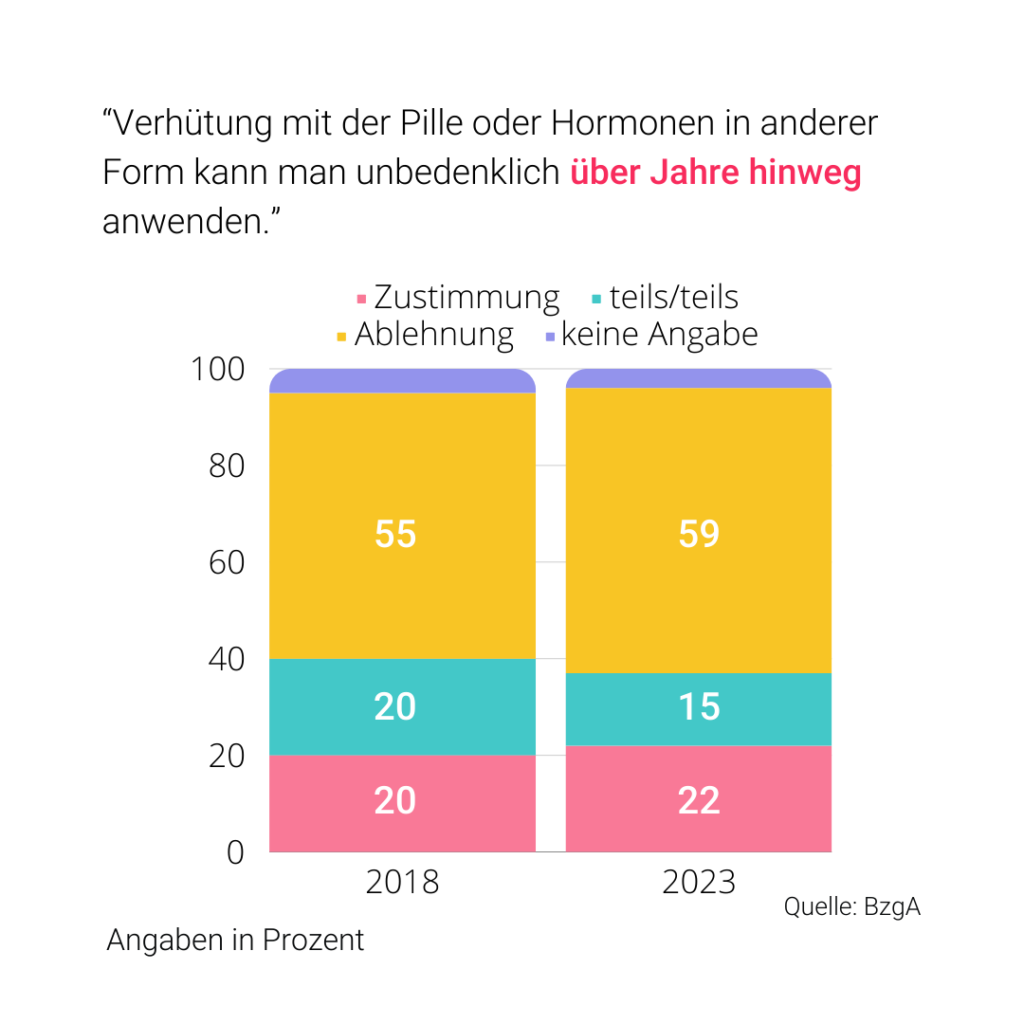
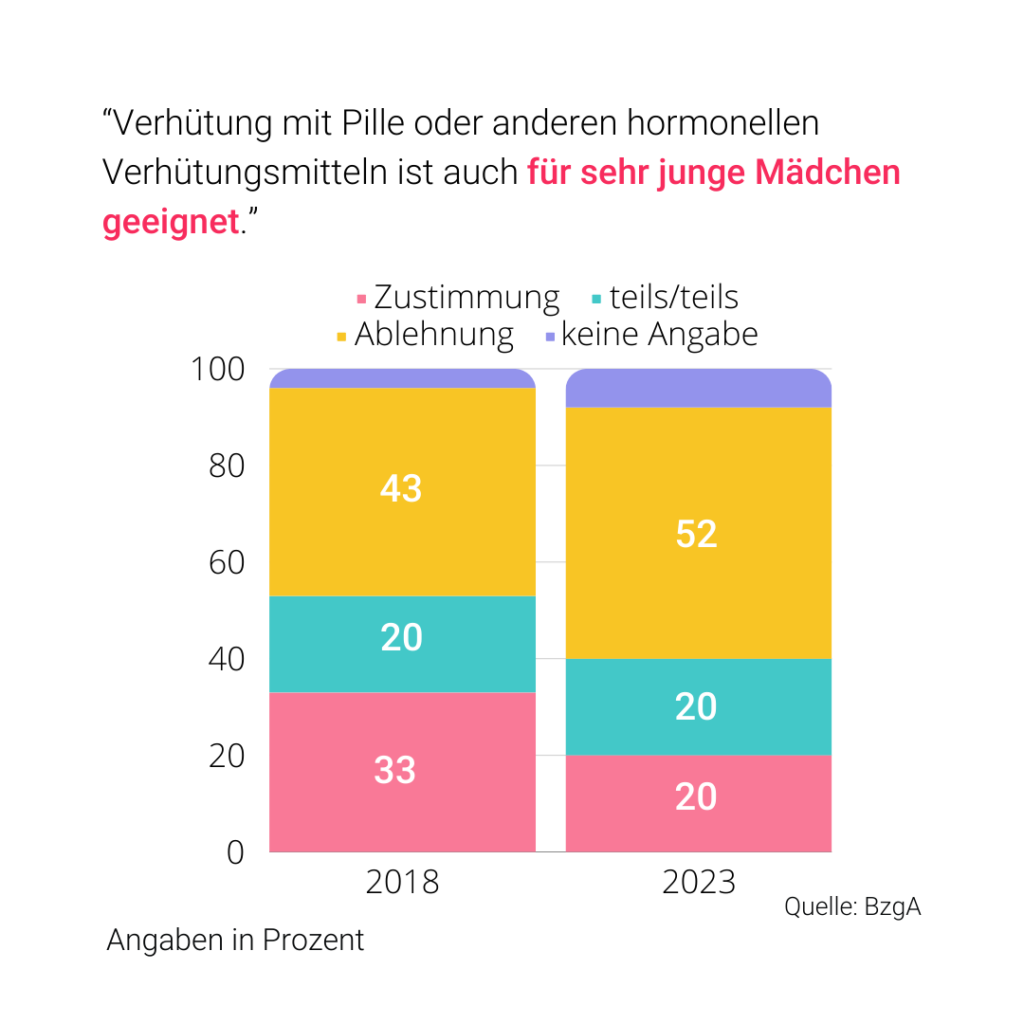
Part of the study also included a survey on Germans‘ attitudes towards hormonal contraception. This revealed that over half of all respondents believe that hormonal contraceptive methods…
… have a negative impact on the body
… should not be taken continuously for several years without concern
… are unsuitable for very young users.
Why is the popularity of hormonal contraception declining?
The driving force behind the increasing skepticism is often the fear of the risks and potential side effects of artificial hormones. Some of the most common side effects include:
Thrombosis
Migraines or headaches
Loss of libido
Depression
Water retention
Nausea and diarrhea
Mood swings
Weight gain and more
All of these side effects are often attributed to the pill, with even 9 out of 10 women reporting to have experienced them at some point.
Many young women are particularly concerned about the study results indicating that the active ingredient Dienogest/Ethinylestradiol, used in third and fourth-generation pills, is responsible for an increased risk of thrombosis. According to the studies, 8 to 11 out of 10,000 women are affected, while in the general population, it’s only 2 out of 10,000.
At the same time, it is primarily the contraceptive effectiveness that motivates women and couples to use the pill for contraception. In terms of this aspect, the pill remains largely unbeaten: the Pearl Index ranges between 0.3 and 1, meaning that out of 100 women taking the pill for a year, 0.3 to 1 become unintentionally pregnant. Especially for very young women, for whom an unintended pregnancy is a particularly threatening scenario, the comparatively simple handling with high efficacy is an important criterion.
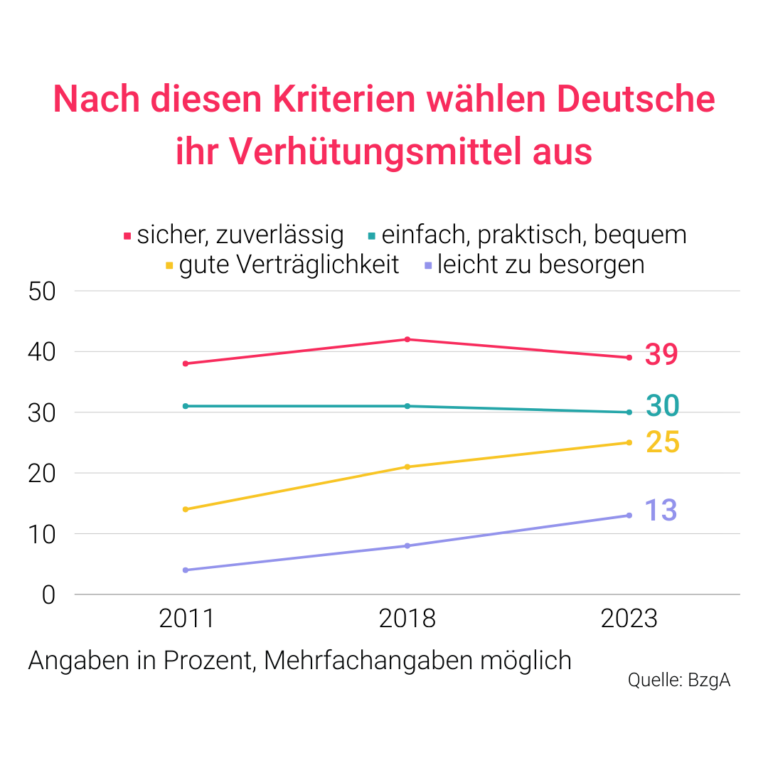
However, women now pay significantly more attention to the tolerability of their contraceptive method when choosing, making this an increasingly important criterion and further highlighting the trend away from the pill.
Conclusion: A difficult conflict. The trend away from the pill is now clearly visible – and given the side effects, especially in the young age group, very understandable.
A good alternative can be a contraceptive computer like trackle, which fulfills all the stated criteria:
Safe and reliable: trackle evaluates according to the symptothermal method, which has a Pearl Index of 0.4 and thus comes very close to the pill in terms of safety. Simple, practical, and convenient: Due to the digitization of the symptothermal method, using trackle is very easy and requires little time. Good tolerability: trackle is hormone- and copper-free, and therefore has no side effects. Easy to obtain: trackle is available without a prescription and can be purchased here on our website.
To learn how trackle works and why hormone-free contraception is not only contemporary but also safe and easy, click here: